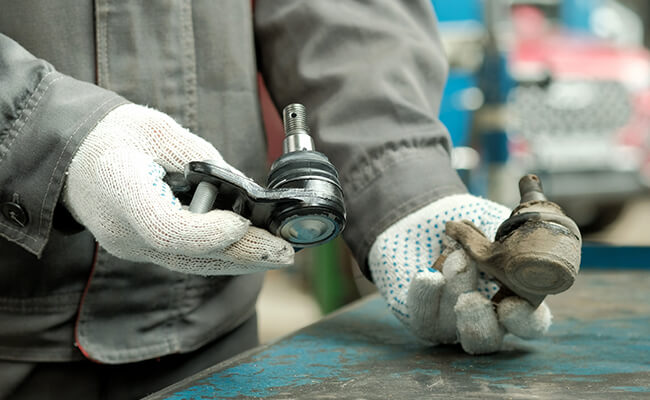
In the automotive service and parts distribution sector, the ball joint replacement cost is a primary metric for measuring the health of the suspension aftermarket. For fleet managers, procurement officers, and wholesale distributors, the ball joint is more than a simple pivot; it is a high-wear safety component that dictates vehicle downtime and maintenance overhead.
As vehicle architectures become more complex—transitioning toward heavier electric vehicle (EV) batteries and sophisticated multi-link systems—the cost for replacing ball joints has seen a steady increase. This report breaks down the economic and technical factors defining the current market.
Technical Overview: The Anatomy of Modern Suspension
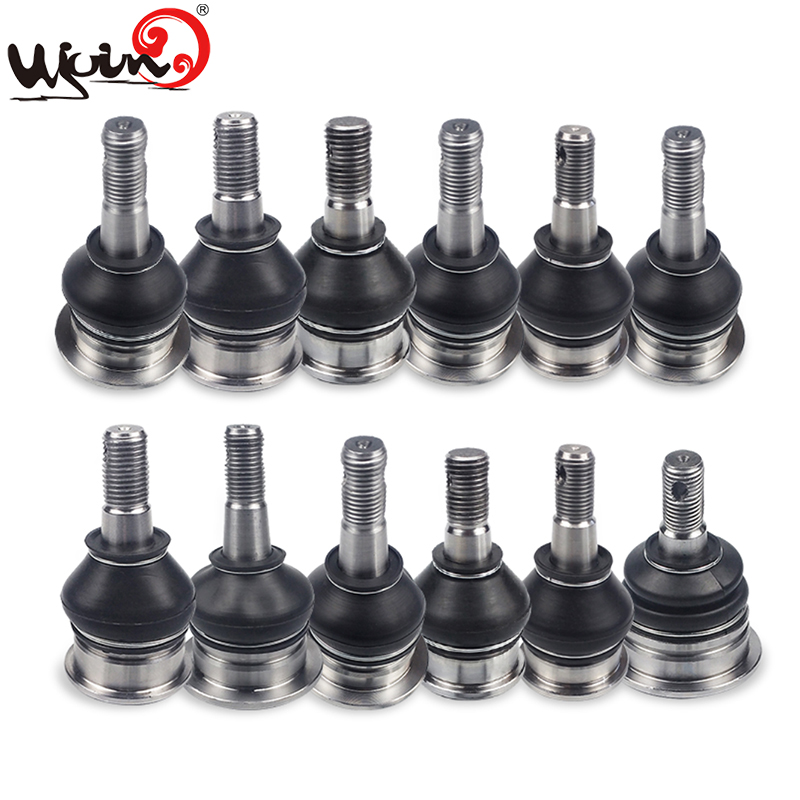
Before calculating the ball joint repair cost, we must categorize the components based on their mechanical role and installation method.
Upper and Lower Ball Joints
In a standard short-long arm (SLA) or double-wishbone suspension, the load is distributed across upper and lower ball joints.
- Load-Bearing (Typically Lower): These joints support the weight of the vehicle and the tension of the springs. Because they endure constant compression and vertical shock, their failure rate is statistically higher.
- Non-Load-Bearing (Typically Upper): These act as followers to maintain steering knuckle alignment. While they may be cheaper to manufacture, their failure causes significant “steering wander,” leading to increased tire wear.
The Suspension Arm Ball Joint Integration
The industry has seen a shift toward the suspension arm ball joint—where the joint is pre-installed into the control arm.
- Pros: Significantly reduces labor time; ensures bushings and joints are replaced simultaneously.
- Cons: Higher initial part cost compared to a standalone press-fit joint.
Comprehensive Ball Joint Replacement Cost Analysis
For a B2B entity, pricing must be analyzed through the lens of Total Repair Value (TRV). Below is a breakdown of current market rates.
Average Ball Joint Car Repair Cost by Vehicle Segment
| Vehicle Segment | Average Labor (Hours) | Part Price (Premium Aftermarket) | Total Estimated Cost |
| Light Passenger (Sedans) | 1.5 – 2.0 | $45 – $85 | $250 – $400 |
| Fleet Vans / Last-Mile Delivery | 2.5 – 3.5 | $65 – $110 | $400 – $650 |
| Heavy-Duty Trucks (Class 1-3) | 3.5 – 5.0 | $90 – $180 | $700 – $1,200+ |
| Performance/Luxury SUVs | 3.0 – 4.5 | $120 – $250 | $600 – $1,000 |
Labor Inflation Factors
In 2026, the ball joint car repair cost is heavily influenced by the “Specialized Tooling” factor. Many modern aluminum knuckles require specific pullers to avoid fracturing the housing. If a shop isn’t equipped with these, labor hours can swell, pushing the repair cost toward the high end of the spectrum.
The B2B Sourcing Strategy: Identifying the “Best Ball Joints”
For distributors and large-scale repair chains, sourcing the best ball joints is a risk-mitigation strategy. A “cheap” part is often the most expensive in the long run due to warranty claims and liability.
Key Quality Indicators (KQI) for Procurement:
- Material Metallurgy: High-carbon forged steel (such as AISI 4140) is the benchmark for the best ball joints. Cast iron alternatives are susceptible to brittle fracture under extreme cold or high-impact loads.
- Surface Finish of the Ball Stud: A mirror-like finish (Ra < 0.2 µm) reduces friction within the socket, preventing the “stiff steering” common in low-grade aftermarket parts.
- Boot Integrity: The dust boot is the most common point of failure. B2B buyers should look for Chloroprene (CR) rubber, which maintains elasticity from -40°C to 120°C.
- Internal Bearing Design: Sintered metal or “metal-to-metal” bearings with grease grooves are preferred for heavy-duty and fleet applications over plastic (POM) sockets.
Understanding the Cost for Replacing Ball Joints in Fleets
Fleet managers must look beyond the individual ball joint repair cost and consider the “Systemic Cost.”
- Tire Life Impact: A single worn suspension arm ball joint can ruin a $300 commercial tire in less than 5,000 miles.
- Downtime vs. Part Cost: For a delivery fleet, the vehicle being “off the road” (OTR) costs an average of $500–$800 per day in lost revenue. Sourcing premium joints that extend service intervals from 50,000 to 100,000 miles effectively halves the long-term maintenance cost.
Regional Trends and Environmental Impact on Repair Costs
The ball joint replacement cost is not uniform globally.
- The Rust Belt Factor: In regions where road salt is used, the labor to remove a seized suspension arm ball joint can double. Professional shops often charge a “corrosion premium.”
- The EV Shift: Electric vehicles are significantly heavier than their ICE counterparts. This weight puts extreme stress on the lower ball joints, leading to a shorter replacement cycle. We anticipate a 15% increase in ball joint demand within the EV fleet sector over the next 24 months.
FAQ
Q1: What happens if I only replace the upper and lower ball joints on one side?
From a B2B safety perspective, this is discouraged. If one side has reached its wear limit, the other side is usually within 10-15% of the same state. Replacing them in pairs reduces the total ball joint car repair cost by requiring only one alignment session rather than two.
Q2: Why is the ball joint repair cost higher for “pressed-in” joints?
Pressed-in joints require the technician to remove the entire steering knuckle and use a hydraulic press. This is physically demanding and time-consuming. In contrast, “bolt-on” joints can be replaced while the knuckle remains on the vehicle.
Q3: How do I justify the cost of the “best ball joints” to a budget-conscious client?
Focus on the Labor Warranty. Explain that 70% of the ball joint replacement cost is labor. If a $30 part fails, the customer pays another $300 in labor. If a $70 “best-in-class” part lasts the life of the vehicle, they save $300+.
Q4: Does a suspension arm ball joint replacement always require an alignment?
Yes. Even microscopic differences in the dimensions of the new joint will alter the camber and toe settings. Skipping an alignment is the leading cause of “unsolved” tire wear issues post-repair.
Q5: Are greasable ball joints better for commercial use?
Generally, yes. For vehicles that undergo regular scheduled maintenance, a greasable joint allows for the expulsion of moisture and grit. However, for “lazy” fleets with infrequent inspections, a high-quality sealed joint is often safer.
Conclusion
The ball joint replacement cost is a variable that can be managed through intelligent sourcing and predictive maintenance. For the B2B professional, the goal is to shift the conversation from “How much does the part cost?” to “How much value does this part provide over 100,000 miles?”
By prioritizing the best ball joints and understanding the mechanical nuances of upper and lower ball joints, businesses can ensure vehicle safety while protecting their bottom line.
Navigating the ball joint replacement cost landscape requires more than just a price list; it requires a deep understanding of metallurgy, labor dynamics, and market trends. For B2B partners, the goal is to balance the immediate ball joint repair cost with the long-term reliability of the vehicle.
At Ujoin Auto Parts, we provide the precision-engineered upper and lower ball joints that professionals trust. Our manufacturing process focuses on durability, ease of installation, and rigorous testing, ensuring that your inventory moves quickly and stays installed.