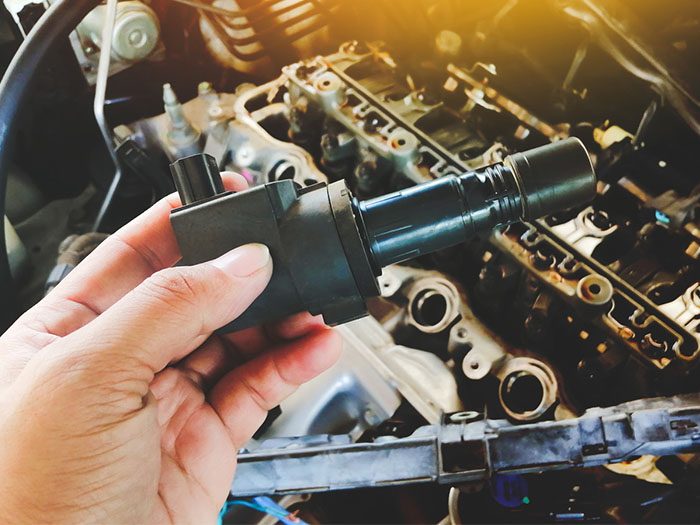
Why Ignition Coil Reliability Matters to Wholesale Distributors
The humble ignition coil stands as one of the most vital components in maintaining engine efficiency, fuel economy, and emission standards. Functioning as a compact step-up transformer, an ignition coil converts a vehicle’s low battery voltage (typically 12 volts) into the tens of thousands of volts (up to 45,000 volts or higher) required to jump the spark plug gap and ignite the compressed air-fuel mixture within the combustion chamber.
For automotive parts wholesalers, repair shop networks, and regional distributors, the ignition coil category represents both a high-volume revenue generator and a critical quality milestone. Because modern internal combustion engines (ICE) rely heavily on precise electronic control modules (ECUs), a single failing ignition coil can trigger a cascade of secondary mechanical and electrical failures—ranging from damaged catalytic converters to unburnt fuel washdown inside cylinder walls.
Understanding ignition coil failure symptoms is essential not only for technicians on the shop floor but also for inventory managers and procurement directors. Stocking sub-par components that suffer from premature dielectric breakdown or thermal degradation leads to heightened return rates, warranty claims, and brand erosion.
As a leading China Auto Parts Supplier, Ujoin Auto Parts provides this comprehensive diagnostic and strategic sourcing guide to help B2B buyers evaluate failure root causes, streamline diagnostic protocols, and select a reliable ignition coil manufacturer for long-term commercial growth.
The Anatomy and Science of Modern Ignition Coils
To accurately identify and diagnose failure patterns, procurement managers and technical salespeople must understand how a modern ignition coil is constructed and the environmental stresses it endures daily under the hood.
Core Architecture of an Ignition Coil
A typical COP (Coil-on-Plug) or pencil-type ignition coil consists of four primary internal sub-assemblies:
- 1. Primary Winding: Constructed from insulated copper wire wrapped around a central core. It receives low-voltage current from the ignition module or engine control unit (ECU).
- 2. Secondary Winding: Comprising thousands of turns of extremely fine copper wire surrounding or nested inside the primary winding. The turns ratio between the primary and secondary windings determines the high-voltage step-up capacity.
- 3. Laminated Steel Core: Concentrates the electromagnetic field, maximizing induction efficiency during magnetic charge and discharge cycles.
- 4. Insulation & Potting Material: High-grade epoxy resin fills the housing cavity, insulating the windings against electrical arc-over, vibration, moisture, and high thermal stress.
Types of Ignition Coils in Modern Vehicles
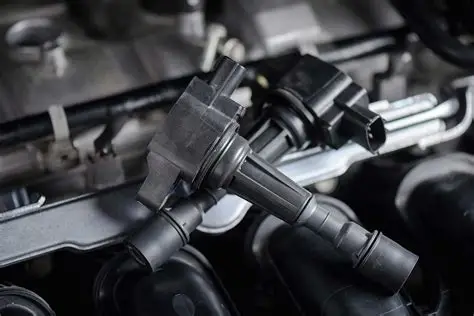
As automotive technology evolved, ignition systems migrated through three main configurations:
- Distributor-Based Coils: Single-coil systems feeding a mechanical distributor cap and rotor. Found primarily in legacy vehicles.
- Waste-Spark Coil Packs: Multiple coils contained within a single housing, firing two cylinders simultaneously. Common in 1990s and early 2000s engine layouts.
- Coil-on-Plug (COP) & Pencil Coils: Individual coils mounted directly atop each spark plug, eliminating spark plug wires entirely. This is the dominant architecture in current vehicle production, eliminating high-tension leads and reducing energy losses.
Top 8 Ignition Coil Failure Symptoms Every Wholesaler Should Know
When end-users or mechanics return parts to a distributor, the claims almost always tie back to a specific set of operational symptoms. Automotive parts wholesalers who educate their sales channels on these symptoms build stronger customer trust and reduce unnecessary product exchanges.
1. Engine Misfires and Rough Idling
The most frequent and recognizable sign of a failing ignition coil is an engine misfire. When a coil fails to deliver sufficient voltage to the spark plug, the air-fuel mixture inside that specific cylinder will not ignite properly.
- What it feels like: The vehicle experiences a noticeable vibration or shaking while idling at a red light or standing still.
- Technical cause: Intermittent insulation breakdown inside the secondary coil winding caused by engine heat cycles.
2. Illumination of the Check Engine Light (CEL)
Modern engine management systems constantly monitor crankshaft rotational speed to detect micro-decelerations associated with cylinder misfires.
- Diagnostic Indicators: Diagnostic Trouble Codes (DTCs) ranging from P0300 (Random/Multiple Cylinder Misfire) to P0301 through P0308 (indicating a misfire in a specific cylinder number).
- Primary DTCs: Codes P0351 through P0358 directly flag primary/secondary ignition coil circuit malfunctions.
3. Significant Loss of Engine Power and Acceleration
When accelerating, climbing hills, or carrying heavy loads, the engine demands higher cylinder pressure, which in turn requires higher voltage to jump the spark plug gap.
- Symptom: Sluggish response, hesitation when pressing the accelerator pedal, or a sudden loss of horsepower.
- B2B Impact: Drivers experiencing power drop under load often purchase replacement coils in complete sets of four, six, or eight to ensure uniform performance across all cylinders.
4. Poor Fuel Economy (Increased Fuel Consumption)
When an ignition coil degrades, combustion efficiency plummets. Unburnt fuel is swept out of the combustion chamber into the exhaust manifold without contributing to engine torque.
- Consequence: Vehicle owners will notice a sharp drop in miles per gallon (MPG) or kilometers per liter.
- Secondary Effect: The ECU may attempt to compensate by altering fuel trim, compounding fuel inefficiency over time.
5. Engine Stalling and Unstable Idle
A weak ignition coil can cause the engine to cut out completely when brought to a stop or while operating at low RPMs. This occurs because the electrical arc across the spark plug gap is easily quenched under variable airflow conditions inside the intake manifold.
6. Hard Starting or Complete No-Start Condition
In single-coil distributor systems or engines where multiple coils experience simultaneous thermal stress, a failed coil will prevent the engine from starting at all. The starter motor turns over normally, but no combustion occurs.
7. Exhaust Backfiring and Black Smoke
When unburnt fuel reaches the red-hot surfaces of the exhaust system, it can spontaneously ignite, causing loud popping or backfiring noises.
- Visual Cue: Black smoke emitting from the tailpipe along with a distinct smell of raw gasoline.
- Warning: Backfiring rapidly destroys catalytic converters, leading to repair bills that far exceed the cost of replacing the ignition coil itself.
8. Catalytic Converter Overheating and Failure
A prolonged ignition coil failure dumps raw hydrocarbon fuel directly into the catalytic converter. The converter’s internal precious metals (platinum, palladium, rhodium) superheat while breaking down this excessive raw fuel, causing the internal ceramic honeycomb matrix to melt or clog completely.
Root Causes of Ignition Coil Failure
To assist your clients in preventing recurring warranty claims, it is crucial to analyze why coils fail prematurely. As an experienced ignition coil manufacturer, Ujoin Auto Parts isolates the root causes into four primary categories:
| Failure Driver | Primary Mechanism | Prevention / Mitigation |
| Worn Spark Plugs | Increases spark gap; requires higher secondary voltage output from coil. | Adhere to strict spark plug replacement schedules (every 30k-60k miles). |
| Extreme Heat & Thermal Cycling | Degrades internal epoxy resin, melting wire enamel and causing short circuits. | Utilize high-grade imported epoxy resin and temperature-resistant PBT plastics. |
| Vibration & Mechanical Stress | Causes micro-fractures in copper winding solder joints and internal ferrite core. | Precision automated winding and robust silicone rubber boots. |
| Oil & Engine Coolant Leaks | Valve cover gasket leaks submerge the coil boot in engine oil, softening rubber boots. | Fix oil leaks immediately; replace boots with high-fluorosilicone rubber. |
Technical Diagnostic Protocols for Mechanics & Wholesalers
When managing returns or providing technical support to commercial clients, running through a standardized diagnostic checklist ensures quick resolution and separates genuine product defects from installation errors.
Diagnostic Step 1: OBD-II Code Reading
Attach an OBD-II scanner to locate active or pending codes. Identify whether the fault is isolated to a single cylinder (e.g., P0303 for cylinder 3) or spread across a bank.
Diagnostic Step 2: The Component Swap Method
To confirm whether the ignition coil or the spark plug/fuel injector is at fault:
- Clear the DTC codes.
- Swap the suspected ignition coil from Cylinder 3 to Cylinder 1.
- Test drive the vehicle until the Check Engine Light returns.
- If the misfire code moves to P0301 (Cylinder 1), the ignition coil is unequivocally defective. If the code remains P0303, the issue lies in the spark plug, wiring harness, or fuel injector.
Diagnostic Step 3: Multimeter Resistance Testing
Using a digital multimeter set to the Ohms (Ω) scale:
- Primary Winding Resistance Test: Connect the multimeter leads to the two primary input terminals on the coil connector. Typical resistance values should range between 0.4 Ω and 2.0 Ω (refer to OEM specifications). An open circuit (∞) indicates a severed wire.
- Secondary Winding Resistance Test: Connect one lead to the secondary output terminal (inside the spark plug boot) and the other to the positive primary terminal. Expected resistance usually ranges between 6,000 Ω and 15,000 Ω (6kΩ–15kΩ). Deviations signal internal winding short circuits.
Why Sourcing High-Quality Coils Matters for Automotive Parts Wholesalers
In the competitive automotive aftermarket, price competition is fierce, but product reliability remains the ultimate driver of long-term profitability. For automotive parts wholesalers, sourcing low-quality, cheap ignition coils creates a hidden cost structure that quickly eats away gross margins.
The True Cost of High Warranty Rates
- 1. Double Handling Costs: Labor required to process returns, inspect claimed defects, and re-stock inventory.
- 2. Damaged Client Relationships: Repair shops lose valuable rack time when a newly installed coil fails on the test drive, eroding trust in the wholesale supplier.
- 3. Freight & Logistics Drain: High return rates inflate return shipping expenses and complicate customs compliance for international shipments.
Key Manufacturing Quality Criteria to Evaluate
When choosing a trusted China Auto Parts Supplier, evaluate their manufacturing standards against these core technical criteria:
- Copper Wire Purity: Premium coils utilize 99.99% pure German or Japanese enamel-coated copper wire to withstand high current density and prevent dielectric breakdown.
- Automated Epoxy Vacuum Injection: Epoxy potting must be conducted under high vacuum to eliminate air bubbles (micro-voids). Air pockets create corona discharges, causing internal electrical arcing and premature failure.
- High-Grade Thermoplastic Housings: Outer casings made from high-grade PBT (Polybutylene Terephthalate) or PPS offer high heat resistance, resisting warping up to 240°C.
- Silicone Rubber Boot Integrity: High-tear-strength fluorosilicone rubber prevents moisture ingress, spark flashover, and oil degradation.
Sourcing Premium Ignition Coils with Ujoin Auto Parts
As an established China Auto Parts Supplier and premier ignition coil manufacturer, Ujoin Auto Parts specializes in serving international automotive parts wholesalers, brand owners, and large-scale importers.
1. Advanced Manufacturing & Testing Facilities
At Ujoin Auto Parts, quality control is integrated into every step of assembly. Our production lines feature automated wire winding, vacuum resin potting, and strict 100% end-of-line testing for spark energy, open-circuit voltage, and thermal resistance from -40°C to +125°C.
2. Comprehensive Catalog Coverage
We manufacture and supply a vast selection of ignition coil part numbers covering major global vehicle applications:
- Japanese Brands: Toyota, Honda, Nissan, Mazda, Subaru, Mitsubishi
- European Brands: Volkswagen, Audi, BMW, Mercedes-Benz, Peugeot, Renault
- American Brands: Ford, Chevrolet, GMC, Dodge, Jeep
3. OEM/ODM Customization for Wholesalers
We support global distributors with private-label branding, customized packaging boxes, laser marking, and specialized technical enhancements tailored to harsh operating environments. Whether you need high-performance red-top coils or standard OEM-spec replacements, Ujoin Auto Parts delivers consistent batch-to-batch quality.
FAQ
Q1: What is the average lifespan of a quality ignition coil?
A high-quality OEM or premium aftermarket ignition coil typically lasts between 100,000 to 150,000 kilometers (60,000 to 90,000 miles). However, bad spark plugs, oil leaks, or excessive engine heat can significantly shorten this lifespan.
Q2: Should ignition coils be replaced in sets or individually?
While replacing a single failed coil gets a vehicle back on the road, automotive parts wholesalers should always advise technicians to replace coils in full sets—especially on vehicles with over 100,000 kilometers. If one coil has failed due to age and thermal wear, the remaining coils have experienced the exact same stress cycles and are likely to fail shortly after.
Q3: What is the difference between COP (Coil-on-Plug) and conventional coil packs?
Coil-on-Plug systems mount directly on top of each spark plug, eliminating high-tension spark plug wires, reducing resistance losses, and allowing precise individual cylinder timing control by the engine ECU. Coil packs feed multiple cylinders through high-voltage spark plug wires.
Q4: How does Ujoin Auto Parts ensure product quality control for bulk orders?
Ujoin Auto Parts operates under IATF 16949 quality standards. Every batch undergoes 100% automated electrical testing, salt-spray corrosion testing, thermal shock testing, and long-duration endurance simulation prior to packaging and sea export.
Q5: Can a faulty ignition coil damage the vehicle’s ECU?
Yes. If an ignition coil suffers a severe primary winding short circuit or a massive internal dielectric break, voltage spikes can travel back through the harness into the ECU driver transistors, potentially burning out the engine control module.
Conclusion: Partner with a Reliable China Auto Parts Supplier
Recognizing ignition coil failure symptoms—from engine misfires and check engine lights to catalyst damage—enables commercial buyers to better support their customer base and make informed procurement choices. For automotive parts wholesalers aiming to maximize profit margins while minimizing warranty claims, partnering with a vetted ignition coil supplier is paramount.
Ujoin Auto Parts brings years of manufacturing excellence, rigorous quality testing, and extensive product coverage to the global automotive aftermarket. By choosing Ujoin as your trusted China Auto Parts Supplier, you gain a strategic partner committed to delivering high-performance, durable ignition coil solutions engineered to meet or exceed OEM specifications.
Ready to Upgrade Your Wholesale Ignition Line?
Contact Ujoin Auto Parts today to request an up-to-date product catalog, OEM cross-reference lists, and competitive wholesale pricing for your target market.