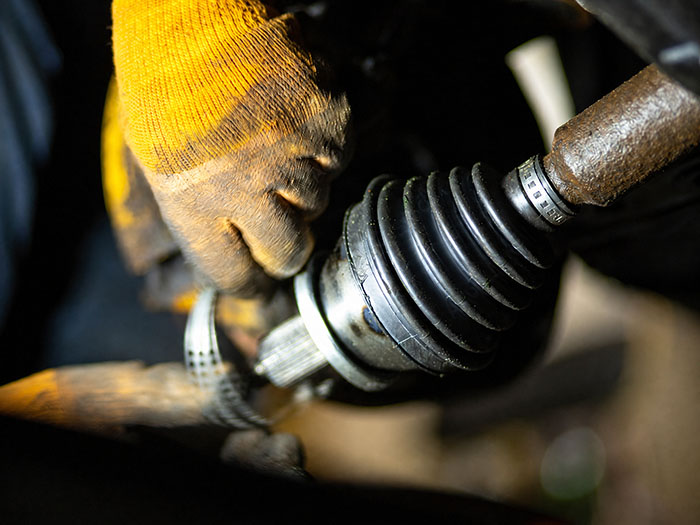
For professional automotive workshops, fleet management networks, and automotive parts wholesalers, the drivetrain stands as one of the most critical assemblies in vehicle maintenance and performance engineering.
Among its core components, the car drive shaft (or propeller shaft) is responsible for transmitting immense torque and rotational energy from the transmission or transfer case to the differentials. Over time, heavy operational stress, universal joint (U-joint) failures, and environmental corrosion necessitate component inspections, repairs, or full replacements.
Knowing how to take a drive shaft out efficiently and safely is a fundamental skill for technician teams. For B2B buyers and wholesalers, understanding this mechanical workflow inside out allows you to better serve your retail clients, stock the exact installation hardware required, and source high-caliber inventory from leading Drive Shaft Manufacturers. When vehicles suffer from drivetrain vibrations, clunking noises during gear shifts, or visible fluid leaks around the slip yoke, replacing the assembly with the best drive shafts available becomes non-negotiable. This comprehensive guide breaks down the removal process step-by-step, highlights crucial diagnostic signals, and analyzes the sourcing advantages offered by a premier China Auto Parts Supplier like Ujoin Auto Parts.
Why Drivetrain Expertise Matters for Automotive Parts Wholesalers
In the global aftermarket and OEM supply chains, automotive parts wholesalers bridge the gap between heavy industrial manufacturing and localized repair centers. When a commercial truck, an off-road 4×4, or a consumer passenger vehicle experiences drivetrain degradation, fleet operators cannot afford extended downtime. By mastering the technical requirements of how to take a drive shaft out, wholesaling executives can curate optimal inventory catalogs, including U-joints, carrier bearings, slip yokes, and complete shaft assemblies.
Furthermore, alignment with top-tier Drive Shaft Manufacturers enables distributors to provide their clients with products engineered to handle exact torque tolerances and rotational balances. A poorly manufactured shaft leads to harmonic vibrations that damage transmissions and pinion bearings, resulting in expensive warranty claims. Partnering with a reliable China Auto Parts Manufacturer ensures access to rigorous quality control standards, custom manufacturing options, and competitive bulk pricing that protects your profit margins.
Diagnostic Indicators: When Does a Drive Shaft Require Removal?
Before executing the physical removal process, proper diagnostics ensure that the drive shaft assembly is indeed the root cause of the vehicle’s symptoms. Wholesalers should educate their sales and support teams on these key indicators to supply the best drive shafts and supporting hardware effectively:
• Intense Under-Carriage Vibrations: A primary sign of a failing drive shaft is a persistent vibration that intensifies as the vehicle accelerates. This often stems from worn-out universal joints, missing balance weights, or a bent shaft tube.
• Clunking, Squeaking, or Rattling Noises: A dry, unlubricated U-joint produces high-pitched squeaking at low speeds, while deep clunking during gear changes (e.g., shifting from Park to Drive) points to excessive play within the joint bearings or slip yoke splines.
• Fluid Leakage at the Transmission or Differential: If the output shaft seal or pinion seal fails due to excessive runout or vibrations from an unstable drive shaft, transmission fluid or gear oil will begin leaking out. Removing the shaft is necessary to replace these seals.
• Visible Physical Damage: Debris on roadways, rough off-road terrain, or improper towing can gouge, dent, or warp the drive shaft tube, instantly throwing it out of balance and compromising structural integrity.
Essential Tools and Safety Equipment Checklist
Safety and precision are paramount when managing drivetrain components. Before initiating the removal sequence, compile the following professional-grade tools and equipment:
• Professional Vehicle Lift or Heavy-Duty Jack Stands: Ensure the vehicle is stably elevated with a high weight capacity.
• Wheel Chocks: Placed firmly behind the tires remaining on the ground to prevent any unexpected vehicle rolling.
• Basic Hand Tools: A comprehensive set of metric and standard combination wrenches, sockets, and a ratchet extension set.
• Torque Wrench: Indispensable for securing fasteners to precise manufacturer specifications during reinstallation.
• Paint Marker or Center Punch: Crucial for scribing alignment marks to preserve the factory rotational balance.
• Fluid Catch Pan & Transmission Plug/Cap: Required to capture and seal any escaping fluid from the transmission tailshaft housing.
• Personal Protective Equipment (PPE): Mechanics’ gloves, impact-resistant safety glasses, and steel-toe footwear.
Step-by-Step Guide: How to Take a Drive Shaft Out Safely
Step 1: Prioritize Safety and Stabilize the Vehicle
Park the vehicle on a flat, level concrete surface. Engage the parking brake firmly and place wheel chocks around the wheels that will stay on the floor. Raise the vehicle using a professional hydraulic lift, or utilize heavy-duty jack stands placed at designated frame lift points. Verify stability by gently shaking the vehicle before working underneath it.
Step 2: Establish Index Marks for Precise Rotational Alignment
One of the most critical errors technicians make during removal is failing to maintain the shaft’s original balance orientation. Use a highly visible paint marker or a center punch to create indexing alignment marks across the drive shaft flange, the universal joint yoke, and the companion flange on the differential. This ensures that during reinstallation or matching component testing, the shaft is reassembled in the exact same phase, preventing destructive harmonic vibrations.
Step 3: Support the Drive Shaft Structure
Drive shafts can be surprisingly heavy and awkward to balance, especially on commercial vehicles or long-wheelbase trucks. Place an adjustable component stand or a secondary jack under the midpoint of the shaft tube. This prevents the assembly from dropping suddenly when the final bolts are extracted, protecting both the technician from injury and the shaft components from impact damage.
Step 4: Unbolt the Rear Universal Joint Flange
Locate the fasteners securing the rear U-joint to the differential companion flange. These are typically held in place by small straps or U-bolts. Using the appropriate wrench or socket, loosen the bolts evenly in a star or cross pattern. If the fasteners are locked by years of rust or thread-locking compound, apply a high-quality penetrating oil and allow it to soak. Carefully extract the straps and bolts, storing them safely in a labeled parts organizer.
Step 5: Separate and Extract the Shaft Assembly
Carefully disengage the rear U-joint from its seat on the differential yoke. If it sticks, use a rubber mallet to gently tap the yoke until it breaks free—avoid hitting the shaft tube itself. For a standard single-piece drive shaft, smoothly slide the front slip yoke straight out of the transmission tailshaft or transfer case extension housing. Immediately place a fluid catch pan underneath to capture any escaping oil, and insert a transmission plug tool into the housing seal to block debris entry. For two-piece drive shafts, you will additionally need to unbolt the center support bearing (carrier bearing) brackets from the vehicle’s chassis crossmember before pulling the slip yoke free.
Technical Analysis: Material Innovations and Balancing Profiles
For global automotive parts wholesalers, selecting inventory is not just about finding cheap components; it is about analyzing material engineering to guarantee long-term operational endurance. Modern Drive Shaft Manufacturers utilize several high-grade materials to meet distinct vehicular applications:
• Steel Drive Shafts: The traditional industry standard, offering unmatched structural yield strength and resistance to physical impacts. Steel is optimal for heavy-duty commercial trucks, industrial logistics fleets, and high-load towing vehicles.
• Aluminum Drive Shafts: Significantly lighter than steel, aluminum reduces rotational mass and parasitic drivetrain power loss, allowing for quicker throttle response and enhanced fuel efficiency. It is highly valued in performance sports cars and modern light-duty passenger trucks.
• Carbon Fiber Composites: The pinnacle of drivetrain engineering, providing extreme weight reduction coupled with superior torsional strength. Carbon fiber inherently dampens vibrations and offers exceptional safety, as the tube shatters safely under catastrophic loads rather than penetrating the vehicle cabin floor.
In addition to material selection, dynamic balancing is the differentiator between cheap replicas and the best drive shafts. Premium manufacturers spin every finished assembly on computerized balancing machines at high RPMs, welding precise counterweights to the tube to eliminate runout. As a B2B distributor, showcasing these manufacturing details builds credibility with commercial buyers and professional fleet operators.
Streamlining Your B2B Supply Chain
Sourcing automotive components globally requires balancing production costs with stringent technical compliance. For businesses looking to dominate their local market, partnering directly with an established China Auto Parts Supplier provides a profound competitive edge.
Ujoin Auto Parts represents the benchmark for international drivetrain manufacturing excellence. Operating out of advanced industrial facilities, Ujoin Auto Parts specializes in engineering high-end drive shafts, universal joints, steering shafts, and custom drive components designed to meet or exceed OEM specifications. By bypassing multi-tiered distribution middlemen, automotive parts wholesalers can collaborate directly with factory engineers to access custom dimensions, specialized material coatings, and robust packaging optimized for overseas container freight.
Furthermore, Ujoin Auto Parts integrates comprehensive quality management protocols—ranging from raw material metallurgical testing to high-speed dynamic balance validation. This ensures that every container shipped to your distribution hub delivers plug-and-play reliability, minimizing costly commercial product returns and strengthening your market reputation as a provider of the best drive shafts available.
FAQ
Q1: What are the primary symptoms of an imbalanced or bent drive shaft?
An imbalanced or bent drive shaft manifests as a high-frequency vibration felt through the floorboards or seats that increases linearly with vehicle speed. Other signs include uneven wear on transmission tailshaft bushings, fluid leaks from the rear output seal, and rhythmic roaring noises.
Q2: Is it mandatory to replace universal joints when replacing a drive shaft?
While not strictly mandatory if the existing joints are brand new, leading Drive Shaft Manufacturers universally recommend replacing U-joints concurrently with the drive shaft. This ensures uniform wear characteristics, eliminates hidden bearing fatigue, and saves substantial labor costs down the line.
Q3: How do B2B buyers verify the manufacturing quality of a China Auto Parts Supplier?
B2B buyers should look for international manufacturing certifications such as IATF 16949 or ISO 9001. Additionally, requesting detailed material testing reports (metallurgical properties), dynamic balance charts, and initial sample batches for localized stress testing are key steps to verify quality. Leading suppliers like Ujoin Auto Parts maintain open transparency regarding their factory testing protocols.
Q4: Can a vehicle be safely driven after a drive shaft has been removed?
In a standard rear-wheel-drive (RWD) vehicle, removing the drive shaft disconnects the engine completely from the drive wheels, meaning it cannot move under its own power. For four-wheel-drive (4WD) or all-wheel-drive (AWD) vehicles equipped with a locking center differential or a selectable transfer case, the vehicle can technically move via the secondary operational axle. However, this places immense, unintended stress on the remaining drivetrain and can cause transmission fluid to leak heavily from the open yoke end, making it highly discouraged except in emergency transport situations.
Q5: What packaging standard should automotive parts wholesalers look for to prevent shipping damage?
Drive shafts are precision-balanced components; any minor dent or bend during maritime or long-haul overland transit will ruin their balance profile. Wholesalers should demand robust packaging consisting of heavy-duty individual cardboard tubes or custom molded foam trays, enclosed within reinforced wooden crates or heavy export pallets. Rust-preventative oil coatings and VCI (Vapor Corrosion Inhibitor) plastic wrapping are also essential to ward off ocean moisture corrosion.
Conclusion
Mastering the mechanical execution of how to take a drive shaft out is a foundational necessity for professional automotive repair, but understanding the manufacturing, engineering, and supply logistics behind these components is what separates successful automotive parts wholesalers from the competition.
To capture market share and ensure fleet operations remain smooth, distributors must prioritize sourcing from top-tier Drive Shaft Suppliers who do not compromise on balancing precision or material grades. By establishing a strategic alliance with an industry-leading China Car Parts Supplier like Ujoin Auto Parts, your business gains access to high-durability products, comprehensive B2B supply chain support, and optimized manufacturing pricing. Equip your inventory with the best drive shafts on the market today to provide your professional client base with the absolute peak of safety, efficiency, and road performance.
For detailed product catalogs, wholesale volume inquiries, or custom manufacturing options, visit Ujoin Auto Parts and elevate your commercial distribution network to the next level.