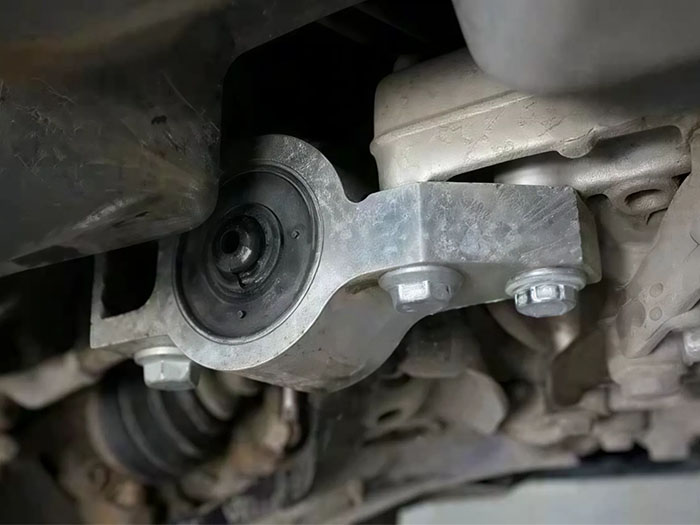
For auto parts wholesalers, understanding the control arm bushing replacement cost is crucial when serving repair shops, distributors, and fleet managers. Control arm bushings are essential components that ensure vehicle suspension stability, reduce vibrations, and maintain smooth handling. Whether you deal with upper control arm bushings or lower control arm bushings, knowing their cost, sourcing options, and quality factors can improve your business decisions and customer satisfaction.
When garage repair networks and end-consumers look into the control arm bushing replacement cost, they are often shocked by the massive gap between the raw material cost and the final invoice at the service counter. For B2B procurement managers, understanding this pricing structure—and knowing how to optimize the supply chain—is the key to capturing market share and maximizing profitability.
This comprehensive guide breaks down the multi-tiered economics of control arm bushing replacement cost structures, explores technical failure points across different bushing designs, and explains why partnering directly with a specialized control arm bushing manufacturer is the ultimate strategy for global auto parts importers.
The Anatomy of Control Arm Bushing Replacement Cost
A control arm bushing is a small yet vital component that connects the vehicle’s control arm to the frame, allowing flexibility and movement while absorbing shocks. Typically made of rubber or polyurethane, bushings reduce friction and vibrations, improving ride quality.
To effectively market and supply suspension components, a wholesale auto parts suppliers network must understand exactly what the end-user or shop owner experiences financially during a repair.
In the independent repair market, the total cost to replace a worn-out suspension bushing generally falls between $200 and $600 per corner at a standard independent garage. If a full front-end suspension overhaul is required, the invoice can easily climb to $800–$2,000. However, the breakdown of these numbers reveals a major supply chain opportunity.
The Labor vs. Parts Disconnect
In standard automotive maintenance, a parts-to-labor ratio of 50:50 is common. For control arm bushings, this formula is completely inverted:
The Physical Part: A typical aftermarket control arm bushing retail price ranges from $15 to $60 depending on the vehicle class.
The Labor & Shop Time: Mechanics charge anywhere from 1.5 to 3.5 hours per side. At modern labor rates of $100 to $180 per hour, labor alone accounts for $150 to $450 of the repair bill.
Mandatory Wheel Alignment: Because removing a control arm completely alters the front-end steering geometry, a professional 3D wheel alignment is mandatory post-installation, adding an extra $80 to $150 to the final bill.
Why Is the Labor So Intensive?
To replace an isolated rubber mount, a technician must rack the vehicle, remove the wheels, decouple the ball joints, unbolt the control arm assembly from the subframe, and use a hydraulic press with specific sleeves to extract the old, seized bushing. The new unit must then be pressed in at the precise geometric indexing angle before reassembling the chassis.
Because this process is highly labor-intensive, many workshops prefer to replace the entire control arm assembly rather than pressing out individual components. For a wholesale auto parts suppliers operation, this means you must maintain a balanced inventory of both isolated bushings and complete control arm assemblies to capture both segments of the repair market.
Upper vs. Lower Control Arm Bushings
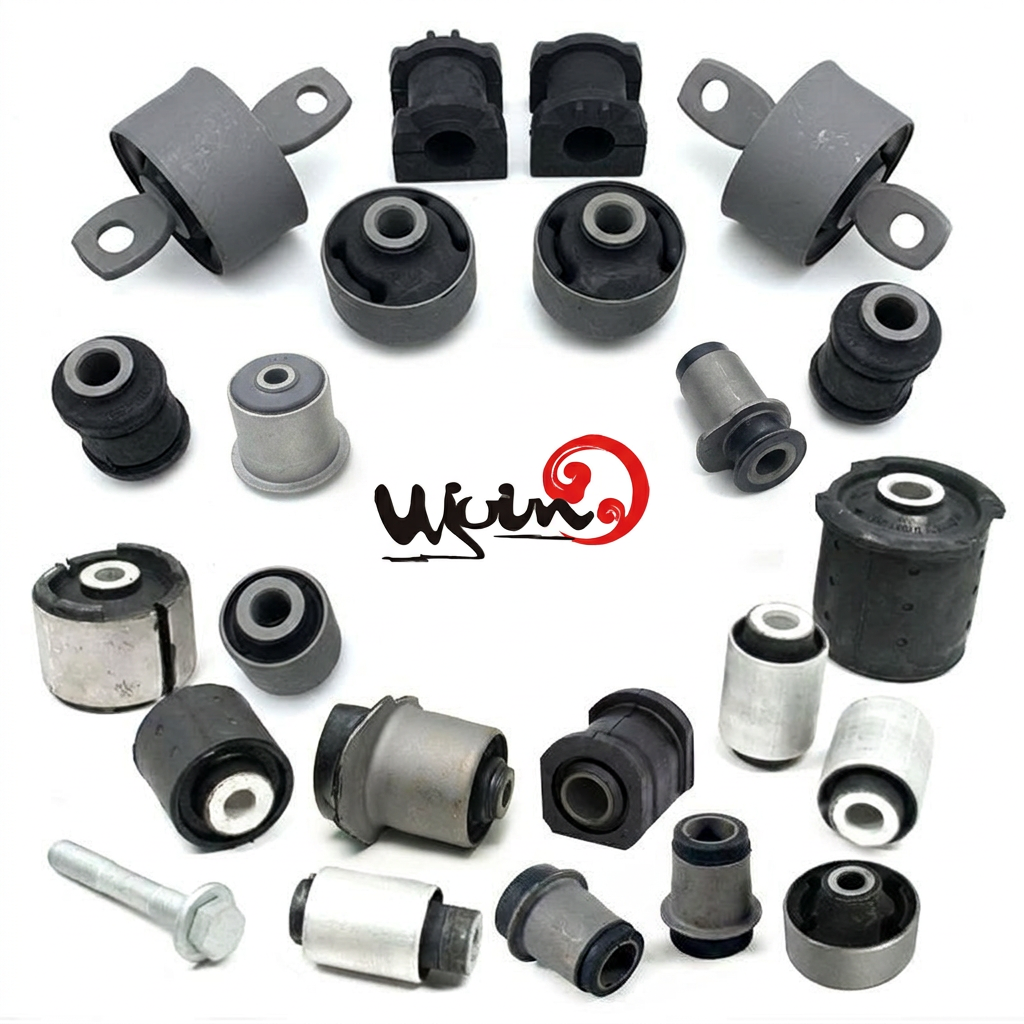
The financial and technical reality of a suspension overhaul shifts dramatically depending on where the component sits within the chassis layout.
| Component Type | Average Retail Part Cost | Average Labor Time | Total Repair Cost Range (Per Corner) | Key Market Demand Drivers |
| Upper Control Arm Bushing | $15 – $40 | 1.5 – 2.0 Hours | $200 – $450 | High wear in double-wishbone setups (SUVs, Pickups, Luxury RWD) |
| Lower Control Arm Bushing | $25 – $80 | 2.0 – 3.5 Hours | $300 – $700 | Massive structural load; high failure rate on heavy FWD/EV models |
Upper Control Arm Bushing Dynamics
The upper control arm bushing typically manages alignment stability and lateral steering forces rather than carrying the primary weight of the vehicle. In double-wishbone suspension systems—common in light trucks, SUVs, and premium European sedans—these bushings are smaller but highly precise. Because they are more accessible than lower links, the labor costs are slightly lower, making them an affordable preventative maintenance item for vehicle owners before uneven tire wear ruins an expensive set of rubber.
Lower Control Arm Bushing Realities
Conversely, the lower control arm bushing bears the brunt of the vehicle’s static weight, braking torque, and road impact energy. The large, rearward horizontal bushing on a front lower control arm (often referred to as a “hydro-bushing” or compliance bushing) is frequently the first suspension component to fail on modern front-wheel-drive crossovers and heavy Electric Vehicles (EVs).
Replacing a lower control arm bushing requires heavy-duty press tools and handles high risk of bolt seizure due to road salt and moisture. Consequently, workshops buy these in massive bulks, making lower bushings a high-turnover priority for any wholesale control arm bushing catalog.
Material Engineering and Quality Control
When you are sourcing inventory from china auto spare parts suppliers, evaluating the physical materials is vital. Low-tier aftermarket parts use cheap, recycled rubber compounds that dry-rot, crack, or delaminate from their steel inner sleeves within 12 months. When a cheap bushing fails prematurely, the workshop has to cover the expensive labor a second time under warranty—a disaster that destroys the distributor’s reputation.
At Ujoin Auto Parts, we engineer our suspension components to match or exceed OE performance baselines, ensuring long-term durability in punishing environments like South America and Africa. Our manufacturing focuses on three key pillars:
Elastomer Composition
We utilize premium Natural Rubber (NR) formulations modified with specialized anti-ozonants and thermal stabilizers. Unlike brittle synthetic alternatives, our rubber retains its high tensile strength and elasticity from -40°C up to 120°C, absorbing high-frequency road vibrations without transferring harshness into the cabin.
Bonding Technology and Metallurgy
A common failure point in aftermarket control arm bushings is the separation of the rubber from the metal sleeve. We utilize a precise, multi-stage chemical bonding and vulcanization process. The inner and outer sleeves are manufactured from heavy-gauge, seamless carbon steel tubes, treated with advanced anti-corrosion coatings (such as zinc phosphate or electrophoretic painting) to resist severe rust and road chemicals.
Hydraulic/Hydro-Bushings Engineering
For modern vehicle applications requiring fluid-filled dampening units, our clean-room assembly lines ensure that internal fluid chambers are perfectly sealed with high-viscosity silicone glycol oil. This design cushions harsh impacts while maintaining crisp steering feedback, giving global buyers an exact OE-spec alternative at a highly competitive aftermarket price point.
The Strategic Value of Sourcing from a Factory Manufacturer
For regional automotive parts importers and distributors, sourcing from middle-man trading companies chokes your margins and muddies quality control transparency. Transitioning directly to a factory control arm bushing manufacturer like Ujoin Auto Parts unlocks clear commercial advantages:
1. Superior Margin Protection for Wholesalers
By eliminating intermediary trading markups, your landed cost per unit drops significantly. This price flexibility allows you to offer highly aggressive pricing to large commercial garage chains and retail stores while maintaining healthy double-digit profit margins for your own business.
2. Deep Catalog Breadth & Precision Fitment
A specialized manufacturer offers thousands of SKUs covering American, European, Japanese, and Korean vehicle applications. Whether your market demands heavy-duty bushings for a Ford F-150 in North America, robust components for a Toyota Hilux in South Africa, or high-volume items for a Volkswagen Gol in South America, direct factory access ensures you get exact spatial geometry tolerances.
3. Supply Chain Adaptability and OEM/ODM Support
As a dedicated manufacturing partner, we provide flexible production batching, customized commercial packaging, and laser-etched part numbering. This allows large-scale buyers to scale up their proprietary private-label brands backed by guaranteed, repeatable factory quality.
Helping Your B2B Clients Identify Wear
To act as a true value-add auto parts wholesale partner, your sales teams should help commercial clients diagnose suspension issues accurately. When a garage tech inspects a vehicle, these are the clear indicators that it is time for a control arm bushing replacement:
Audible Metallic Clunking: A distinct metallic knocking or popping sound occurring during heavy braking, sharp acceleration, or when crossing potholes. This indicates the rubber has completely torn away, allowing the aluminum or steel arm to slam against the subframe bracket.
Steering Wheel Wandering: When the inner sleeve loses its structural hold, the wheel alignment shifts dynamically under load. The driver will complain that the vehicle pulls or drifts on the highway, requiring constant minor corrections.
Accelerated Inner Tread Wear: A torn or softened bushing allows the wheel to tip into excessive negative camber or dynamic toe-out under load. This rapidly scrubs away the inner edge of the tires, forcing car owners into expensive tire replacements.
Visual Dry Rot and Fluid Leaks: Visual inspections showing deep dry-rot fissures, physical tearing of the rubber meat, or oily stains leaking from fluid-filled hydraulic bushings indicate immediate failure.
FAQ
Q1: Is it better to replace just the control arm bushing or the entire control arm assembly?
A: From a strict parts-cost perspective, replacing just the bushing is cheaper. However, for vehicles with high mileage, the labor cost required to press out a stubborn bushing often equals or exceeds the time needed to swap out a complete arm. Furthermore, if the control arm features an integrated, non-serviceable ball joint that is also nearing the end of its lifespan, replacing the entire control arm assembly is the most logical choice. We recommend wholesalers stock a balanced mix of both standalone bushings and full arm assemblies to satisfy varying repair strategies.
Q2: Why do control arm bushings fail prematurely on heavy SUVs and Electric Vehicles (EVs)?
A: EVs and modern mid-size SUVs carry significantly higher curb weights due to battery packs and structural reinforcement. The immense instantaneous torque from electric motors combined with heavy regenerative braking puts unprecedented structural stress on the lower control arm bushing. This accelerated wear has created a massive surge in aftermarket demand for high-strength, premium-grade replacement bushings.
Q3: How does Ujoin Auto Parts ensure consistent quality across high-volume production batches?
A: As an established control arm bushing manufacturer, our production facilities operate under strict IATF 16949 quality management certifications. Every production batch undergoes rigorous testing, including rubber durometer hardness verification, tensile strength tests, advanced ozone resistance aging analysis, and hydraulic press pull-out force checking. We maintain strict control over every step of production to ensure our parts match OE tolerances perfectly.
Q4: What are your shipping, minimum order quantities (MOQ), and private label policies for global wholesalers?
A: We offer flexible MOQ frameworks tailored to specific regional market demands, allowing distributors to build balanced containers across diverse SKU lists. We provide full OEM/ODM support, including customized packaging options and private-label branding. Our logistics teams are highly experienced in fast, compliant container shipping to major global ports across South America, Africa, Europe, and the Middle East.
Q5: How long do control arm bushings last?
A: Most rubber bushings last between 60,000 and 100,000 miles, while polyurethane bushings can last over 150,000 miles.
Conclusion
Understanding the nuances of control arm bushing replacement cost dynamics allows B2B parts distributors to position their products effectively. While end-consumers will always face high labor bills for suspension repairs, providing the market with reliable, precision-engineered components ensures that the parts cost remains predictable and fair.
To stay competitive in the fast-evolving global aftermarket, your business needs to move away from generic middlemen and source directly from proven manufacturing hubs. By partnering with a dedicated factory like Ujoin Auto Parts, you protect your supply chain from quality fluctuations, optimize your import costs, and give your clients access to top-tier chassis components.
Contact our international B2B procurement team today to request a comprehensive product catalog, receive factory-direct wholesale pricing quotes, and explore how we can help elevate your regional market share.