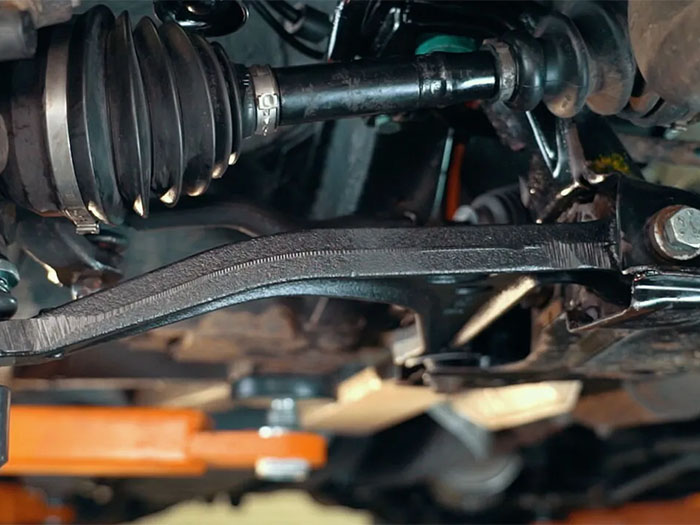
Why control arm diagnostics matter for your bottom line. For auto parts wholesalers and repair shop distributors, a control arm is more than just a suspension component—it is a critical safety item that dictates customer satisfaction and business reputation. When a vehicle owner experiences symptoms of a bad control arm, they rely on their mechanic for a precise diagnosis. If the replacement part fails prematurely due to poor manufacturing, the resulting “comeback” costs the repair shop labor hours and the distributor their credibility.
Understanding the symptoms of bad control arm units is not just for mechanics; it is essential for procurement managers. By identifying these failure points early, B2B buyers can better educate their clients and source higher-quality inventory from a reliable control arm supplier.
The Engineering Role: Upper vs. Lower Control Arms
Before diving into the bad control arms symptoms, we must understand the mechanical distinction. Most modern vehicles utilize an independent suspension system where control arms (also known as “A-arms”) connect the wheel hub to the vehicle’s chassis.
Upper Control Arm: Generally found in double-wishbone suspensions or specific truck/SUV setups. It manages the top of the steering knuckle and is crucial for maintaining camber alignment.
Lower Control Arm: Present in almost all suspension types, including the common MacPherson strut. It bears more of the vehicle’s weight and handles significant impact forces from the road.
As a B2B partner, knowing whether your clients are seeing bad upper control arm symptoms versus bad lower control arm symptoms helps you manage your SKU inventory more effectively.
The Core Symptoms of a Bad Control Arm
In the international auto parts trade, technical precision is key. Below are the primary symptoms of bad control arms that your technical teams and clients should monitor.
A. Auditory Indicators: Clunking and Squeaking
The most common symptoms of bad control arm units are unusual noises. These usually stem from two areas: the bushings or the ball joint.
- Clunking Noises: Often heard when driving over bumps, potholes, or during hard braking. This typically indicates that the rubber bushings have perished or the ball joint has excessive “play.”
- Squeaking: Often a sign of a dry or torn ball joint boot. Once the factory lubricant escapes, metal-on-metal friction creates a high-pitched squeal during steering maneuvers.
B. Steering Instability and “Wandering”
When the bushings or ball joints in a control arm fail, the wheel’s alignment is no longer held within tight tolerances. This leads to symptoms of a bad control arm described as “steering wander.” The driver may feel the car pulling to one side or find it difficult to maintain a straight line on the highway. For a repair shop, this is a clear indicator that the control arm’s structural integrity is compromised.
C. Excessive Vibrations
Vibrations felt through the steering wheel or the vehicle floor are classic bad lower control arm symptoms. When the bushings are cracked or softened (often due to oil leaks or environmental degradation), they can no longer dampen road shocks. These vibrations accelerate the wear of other components, such as tie rod ends and steering racks.
D. Uneven Tire Wear
For a B2B distributor, advising clients to check tire wear patterns is a value-added service. Symptoms of bad control arm issues often manifest as “cupping” or inner-edge wear on tires. This happens because the failed arm allows the wheel to tilt (camber) or oscillate (toe) incorrectly while driving.
Detailed Breakdown: Bad Upper vs. Lower Symptoms
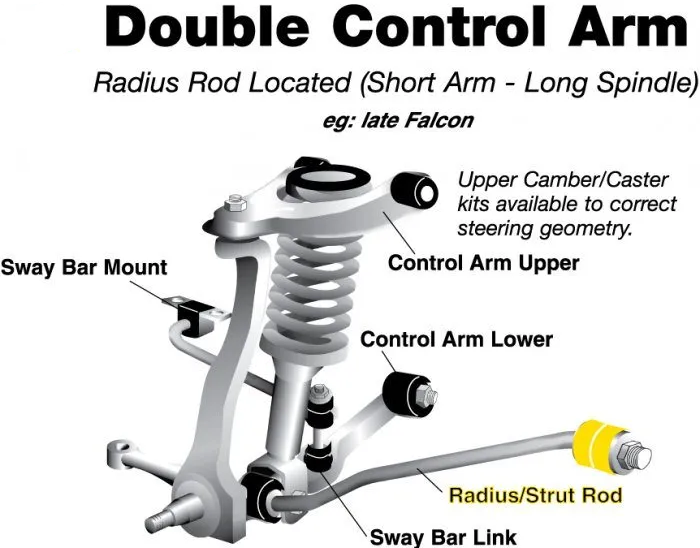
As a specialist control arm supplier, we recognize that failure patterns differ based on the arm’s position.
Bad Upper Control Arm Symptoms
- Camber Misalignment: Since the upper arm controls the top of the knuckle, failure often results in the top of the tire leaning inward or outward.
- Specific Squeaking during Steering: Because upper arms are often closer to the driver’s compartment in certain configurations, steering-related noises are more pronounced.
Bad Lower Control Arm Symptoms
- Braking Instability: Because the lower arm handles the longitudinal force of braking, a bad bushing will cause the wheel to “shudder” or move backward in the wheel well when the brakes are applied.
- Load-Bearing Failure: Lower arms carry more weight; therefore, structural cracking or bending is more common here after a heavy impact.
High-Quality vs. Low-Quality Control Arms
| Feature | Premium Control Arm (e.g., Ujoin Auto) | Low-Cost “White Box” Alternative |
| Bushing Material | High-density natural rubber or Polyurethane | Recycled rubber (prone to cracking) |
| Ball Joint Design | Heat-treated steel with mirror-finish ball | Untreated metal (prone to early play) |
| Surface Coating | E-coating or powder coating (corrosion resistant) | Standard spray paint (rusts within months) |
| Manufacturing | Robotic precision welding & OE Specs | Manual welding with variable tolerances |
| B2B Impact | Low return rate, high client trust | High “comeback” rate, lost labor costs |
The B2B Perspective: Why Quality Diagnosis Prevents Financial Loss
In the B2B sector, symptoms of a bad control arm represent more than just a repair—they represent a procurement decision.
The Hidden Cost of Cheap Parts:
When a distributor sources from an unverified control arm supplier, they might save 10% on the unit price but lose 100% of their reputation when the part fails within 5,000 miles. Failed bushings or premature ball joint play in “new” parts are the leading causes of warranty claims.
Diagnostic Excellence as a Sales Tool:
Wholesalers who provide their clients (repair shops) with technical checklists on symptoms of bad control arm units position themselves as partners, not just vendors. This consultative approach builds long-term loyalty and justifies the premium for high-quality components.
Technical Diagnostic Procedures for Professionals
To confirm symptoms bad control arm units are indeed the culprit, B2B clients should encourage their technicians to use the following professional methods:
The Pry Bar Test: With the vehicle on a lift, use a pry bar to apply pressure between the control arm and the frame. Any significant movement in the bushing indicates failure.
The Shake Test: Grasping the wheel at the 12 and 6 o’clock positions and shaking it vigorously can reveal ball joint play, a hallmark symptom of bad control arm assemblies.
Visual Inspection for Tears: Inspect the rubber boots of the ball joints. Even a pinhole leak can lead to catastrophic failure due to contamination.
FAQ
Q1: How long do high-quality control arms typically last in the market?
Given the diverse road conditions, a premium unit from a reputable control arm supplier should last between 60,000 to 100,000 miles. However, extreme terrain may accelerate bad control arm symptoms, requiring inspections every 15,000 miles.
Q2: Can I just replace the bushings instead of the whole arm?
While possible, B2B distributors often recommend replacing the entire assembly. The labor cost to press out old bushings often exceeds the cost of a new arm, and a new assembly ensures the ball joint is also refreshed, preventing future symptoms of bad control arm issues.
Q3: What are the most overlooked symptoms of bad control arms?
Subtle steering wheel vibration at specific speeds (60-70 mph) is often misdiagnosed as wheel imbalance when it is actually a sign of softening control arm bushings.
Q4: Can I drive with symptoms of bad control arms?
Technically yes, but it is not recommended. Driving with symptoms of bad control arms can lead to: loss of steering control, accelerated tire wear, suspension system damage.
Q5: How do bad lower control arm symptoms differ from upper control arm issues?
Bad lower control arm symptoms are typically more severe: strong noise during braking, load-related instability. While bad upper control arm symptoms are more subtle: alignment drift, minor tire wear patterns.
Q6: Why should a wholesaler choose Ujoin Auto Parts as their control arm supplier?
Ujoin Auto Parts focuses on OE-specification precision. We address the root causes of bad lower control arm symptoms by using reinforced materials and advanced damping rubber, specifically designed for the heavy-duty cycles of international markets.
Conclusion
Partner with a quality-first control arm supplier. Identifying the symptoms of a bad control arm is the first step toward road safety and business success. For wholesalers and distributors, the goal is to provide parts that silence these symptoms for the long haul.
Choosing a low-quality component might mask symptoms of bad control arms temporarily, but it will eventually lead to dissatisfied end-users and financial losses for your distribution network. By partnering with a dedicated control arm supplier like Ujoin Auto Parts, you ensure that every part you sell meets rigorous technical standards.