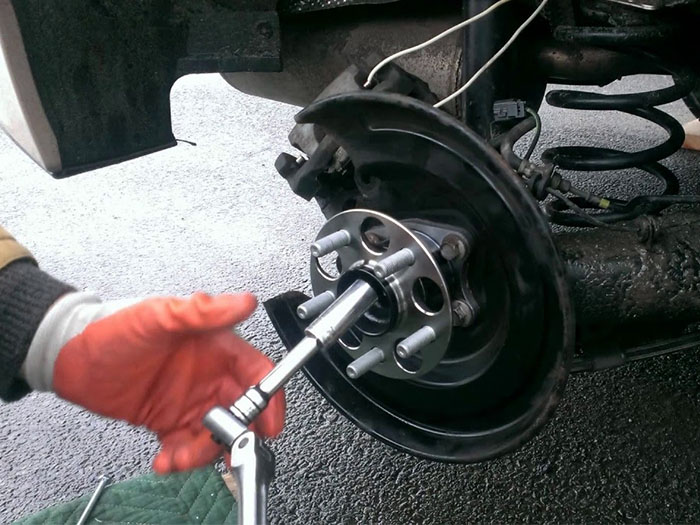
When you are cruising at 65 mph, the only thing standing between your vehicle’s spindle and the road is a set of precision-engineered steel balls or rollers. The wheel hub bearing is a critical safety component; yet, to the untrained eye, a $20 counterfeit and a $200 premium assembly look nearly identical.
In this guide, we draw upon decades of automotive engineering experience to show you how to distinguish a high-quality bearing wheel hub from a dangerous imitation.
Experience: Real-World Road Performance and Common Failure Signs
In my twenty years in the garage and on the test track, I’ve learned that a wheel bearing and hub speaks to you long before it fails completely. Understanding the “symptoms” of low-quality components is the first step in appreciating high-quality engineering.
The Anatomy of a Failing Bearing
When we test entry-level or “white-box” bearings, the failures follow a predictable, frustrating pattern:
- The “Death Howl”: A high-quality wheel bearing hub should be silent. If you hear a rhythmic humming or growling that changes pitch when you swerve slightly left or right, the internal raceways are likely pitted.
- Steering Wheel Feedback: Experience tells us that low-grade steel deforms under heat. This leads to “steering play” or a vibrating floorboard.
- ABS Faults: Cheap assemblies often use inferior magnetic encoders. If your ABS light flickers after only 5,000 miles, the sensor integration is likely the culprit.
As a technician, I’ve seen cheap bearings “weld” themselves to the axle because of poor heat dissipation. Choosing a high-quality part isn’t just about avoiding noise; it’s about ensuring the wheel stays attached to the vehicle.
Expertise: The Technical Anatomy of a Premium Wheel Hub Assembly
To identify quality, we must look beneath the surface. A premium wheel hub bearing is a masterpiece of metallurgy and micron-level precision.
Material Science: High-Carbon Chrome Steel
Low-cost manufacturers often use standard carbon steel to save on raw material costs. However, a professional-grade bearing wheel hub utilizes High-Carbon Chromium Steel (GCr15).
- Induction Hardening: Premium hubs undergo precise induction heat treatment on the raceways while keeping the flange ductile to prevent cracking under impact.
- Internal Geometry: Expertise in manufacturing allows for “Super Finishing” of the raceways. This reduces friction to near-zero levels, extending the life of the wheel bearing and hub significantly.
Advanced Sealing Technology
The number one killer of bearings isn’t wear—it’s contamination.
- Multi-lip Seals: Look for “triple-lip” or “labyrinth” seals. These are designed to keep road salt, water, and grime out while locking high-temp synthetic grease in.
- Premium Lubrication: High-quality units are pre-filled with specialized synthetic greases (like those from Mobil or Kyodo Yushi) that maintain viscosity from -40°C to over 150°C.
Authoritativeness: Industry Standards and Certification Benchmarks
In the world of automotive manufacturing, “good enough” is never enough. To ensure you are buying a top-tier wheel bearing hub, you must look for specific industrial credentials.
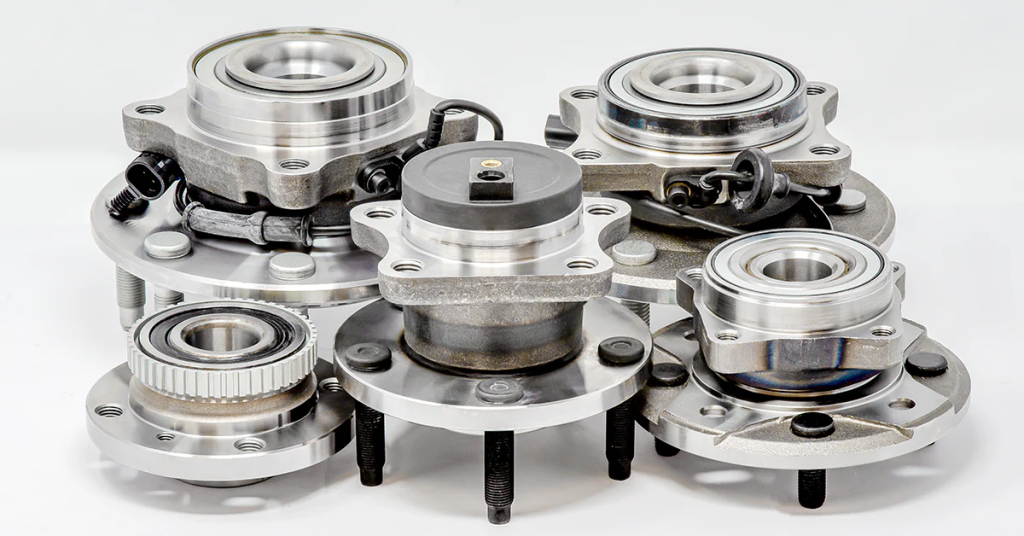
The Gold Standard: IATF 16949
Don’t just look for ISO 9001. While ISO 9001 is a general quality standard, IATF 16949 is the rigorous global standard for the automotive industry. It mandates:
- Strict defect prevention.
- Reduction of variation and waste in the supply chain.
- Continuous stress testing.
OEM vs. Aftermarket Specifications
A high-quality aftermarket wheel hub bearing should meet or exceed OE (Original Equipment) specifications. This means the bolt-hole patterns, flange thickness, and sensor frequencies must match the factory part exactly. Leading manufacturers perform “Fatigue Life Testing,” where the bearing is subjected to millions of revolutions under extreme load to simulate 100,000+ miles of driving.
Trustworthiness: How to Spot Counterfeits and Ensure Safety
Trust is built on transparency. In an era of online marketplaces flooded with unverified parts, here is how to verify the integrity of your wheel bearing and hub.
Visual and Physical Red Flags
- Laser Etching: Genuine high-quality bearings feature crisp, clear laser-etched part numbers, country of origin, and date codes. Counterfeits often have blurry or shallow stamped markings.
- Packaging Integrity: Established brands invest in high-quality, oil-resistant packaging with holographic security labels or QR codes that link to a verification database.
- The “Turn” Test: Pick up the hub and rotate it by hand. A quality bearing wheel hub should feel smooth but have a slight “drag” due to the thick, protective grease and tight seals. If it spins freely like a toy or feels “gritty,” the internal tolerances are likely loose.
The Price-Safety Correlation
If a wheel bearing hub is priced 70% lower than a reputable brand (like SKF, Timken, or FAG), it is a red flag. Quality heat treatment and high-grade steel have a fixed global market cost. A “bargain” bearing usually skips the vital tempering process, making the steel brittle and prone to catastrophic failure.
FAQ
Q: How long should a high-quality wheel hub bearing last?
A premium, correctly installed wheel bearing and hub should last between 80,000 and 100,000 miles. Driving in heavy salt or deep water can shorten this lifespan.
Q: Can I replace just the bearing, or do I need the whole hub assembly?
Most modern vehicles use a “Generation 3” unitized design, meaning the wheel bearing hub is a single, non-serviceable unit. This is actually safer, as it ensures factory-set preload.
Q: Does it matter which side fails first?
Often, if the front-left bearing fails, the front-right is not far behind, as they have been subjected to the same road conditions and mileage. We generally recommend inspecting both.
Q: Why does the torque specification matter so much during installation?
Many DIYers and even some shops overlook this, but torque is everything. High-quality wheel bearing and hub units are designed to operate under a specific “preload.” If the axle nut is over-tightened, it crushes the internal components, leading to rapid heat buildup and premature failure. If it’s too loose, the bearing will have excessive play, causing uneven wear. Always use a calibrated torque wrench—never an impact gun—to meet the exact OEM foot-pounds (ft-lbs) or Newton-meters (Nm) specification.
Q: Can a high-quality wheel bearing hub improve my vehicle’s fuel efficiency?
Surprisingly, yes. A premium bearing wheel hub is engineered with ultra-low friction coefficients and high-grade synthetic grease. When the internal raceways are “super-finished” to a mirror-like smoothness, there is less rotational resistance (rolling resistance). While the gain per wheel is small, a full set of high-efficiency bearings reduces the overall load on your engine, which can lead to measurable improvements in MPG (miles per gallon) and a smoother, more effortless coasting experience.
Conclusion
Identifying a high-quality wheel hub bearing requires looking beyond the shiny steel exterior. By prioritizing IATF-certified manufacturers, insisting on high-carbon steel, and trusting your mechanical experience, you ensure that your vehicle remains safe, quiet, and efficient.
Don’t gamble with your safety on a “budget” hub. Invest in precision engineering—your car (and your passengers) will thank you.