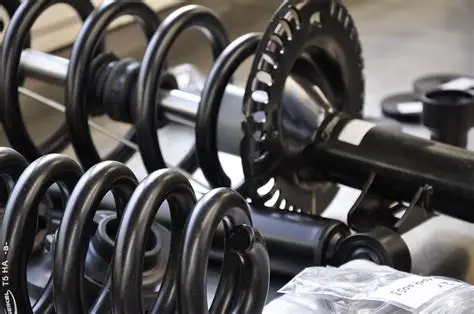
For businesses operating in the automotive aftermarket or OEM supply chain, accurate measurement of a shock absorber is not just a technical detail—it’s a critical step in ensuring proper fit, performance, and customer satisfaction. Whether you are an automotive shock absorber distributor, a wholesaler, or an international buyer sourcing directly from a Shock Absorber manufacturer, knowing how to measure a shock absorber correctly can save time, reduce returns, and protect your reputation in the market.
This guide provides a step-by-step technical process for measuring an auto shock absorber, tailored for B2B customers who need to make bulk purchasing decisions, verify product compatibility, and work closely with trusted Shock Absorber Suppliers and Shock Absorber Wholesale partners.
What Dose a Shock Absorber Do In a Car?
A shock absorber is a vital component of a vehicle’s suspension system. It controls spring movement, reduces vibration, and ensures that the wheels stay in contact with the road. A car shock absorber also contributes to driving comfort, handling stability, and overall vehicle safety.
In B2B sourcing, shock absorbers come in multiple variations: twin-tube, monotube, coilover, and air shocks. Each type has unique dimensions and technical parameters that buyers must measure before confirming compatibility with specific vehicle models.
Key Parameters of a Shock Absorber
When measuring an automotive shock absorber, the following parameters are most critical:
- Extended Length – The maximum length of the shock absorber when fully extended.
- Compressed Length – The length of the shock absorber when fully compressed.
- Stroke/Travel – The difference between extended and compressed lengths.
- Mounting Type – The design of the mounting ends (eyelet, stud, clevis, loop, etc.).
- Outer Tube Diameter – The thickness of the body tube, influencing durability and performance.
- Rod Diameter – The piston rod diameter, which affects shock absorber strength.
- Bushing Size & Bolt Hole Diameter – Key for ensuring exact fit into the suspension system.
For a Shock Absorber Supplier or Manufacturer, these parameters are often listed in product catalogs, but as a buyer, verifying them independently can help avoid mismatches.
Tools Required for Measuring a Shock Absorber
Before starting, prepare the following tools:
- Measuring tape or ruler (preferably in millimeters and inches)
- Vernier caliper (for precision measurements of rod and bushing)
- Marker and notepad (to record dimensions)
- Shock absorber measurement chart (optional, provided by some suppliers)
When purchasing from Shock Absorber Wholesale distributors, these tools also help in verifying that bulk shipments meet quality and specification requirements.
Step-by-Step Guide: How to Measure a Shock Absorber
Step 1: Clean the Shock Absorber
Ensure that dirt, grease, or debris is removed from the auto shock absorber before measuring. Clean surfaces give more accurate readings and help identify part numbers if available.
Step 2: Identify the Mounting Points
Shock absorbers for cars have different mounting configurations:
- Eyelet-to-Eyelet (loop at both ends)
- Stud-to-Eyelet (one threaded stud, one loop)
- Clevis-to-Eyelet (fork-style mount with a loop)
- Stud-to-Stud Mark these points clearly before beginning measurement.
Step 3: Measure Extended Length
- Pull the shock absorber to its maximum extension.
- Measure from the center of one mounting point to the center of the other.
- Record this as the extended length.
This is one of the most important parameters for matching shock absorbers with vehicles.
Step 4: Measure Compressed Length
- Push the shock absorber to its minimum compression.
- Again, measure from mounting point center to center.
- Record this as the compressed length.
This dimension ensures that the shock will not bottom out during suspension movement.
Step 5: Calculate Stroke (Travel)
Subtract compressed length from extended length.
The result is the stroke length, which determines how much suspension travel the shock can handle.
For example:
Extended Length = 500 mm
Compressed Length = 320 mm
Stroke = 180 mm
Step 6: Measure Mounting Hardware
Use a caliper to measure the inner diameter of bushings or the bolt hole diameter.
Record the outer width of the eyelet or clevis.
Verify against OEM specifications to ensure compatibility.
Step 7: Measure Body Tube and Rod Diameter
Use a caliper to measure the body tube diameter.
Measure the piston rod diameter, as larger rods generally indicate stronger durability, especially in heavy-duty automotive shock absorber applications.
Step 8: Cross-Check Against Vehicle or OEM Data
After recording all measurements, compare them with the original equipment specifications or supplier catalogs. Many professional Shock Absorber Manufacturers and Suppliers provide detailed measurement charts to make this easier.
Common Measurement Mistakes to Avoid
- Measuring outside of mounting points instead of center-to-center.
- Not fully compressing or extending the shock absorber before measurement.
- Ignoring mounting type differences, assuming that two shocks with similar lengths will fit.
- Overlooking stroke length, which can cause bottoming out or limited suspension travel.
- Not verifying bushing sizes, leading to installation issues.
Why Accurate Measurement Matters for B2B Buyers
For wholesalers, distributors, and international buyers, measurement accuracy directly affects:
- Inventory Management – Avoiding stock of mismatched or incompatible parts.
- Customer Satisfaction – Reducing returns and complaints from buyers.
- Supply Chain Efficiency – Ensuring seamless sourcing from Shock Absorber Manufacturers.
- Profitability – Eliminating unnecessary replacement costs and lost sales opportunities.
A small measurement error can lead to large-scale procurement issues, especially when dealing with high-volume orders from a Shock Absorber Wholesale partner.
Industry Applications: Different Vehicles, Different Needs
Passenger Cars (car shock absorbers) – Focus on comfort and handling.
SUVs and Pickup Trucks – Require longer stroke and stronger piston rods.
Commercial Vehicles – Demand heavy-duty shock absorbers with larger diameters.
Performance & Off-road – Specialized monotube or coilover shocks with precision measurement requirements.
As an auto shock absorber buyer, understanding the unique needs of each market segment helps in negotiating with manufacturers and ensuring product alignment.
Working With Shock Absorber Manufacturers and Suppliers
When sourcing, consider the following factors:
- Customization – Many Shock Absorber Manufacturers can produce according to your measurements.
- MOQ (Minimum Order Quantity) – Wholesale buyers should align with supplier requirements.
- OEM vs Aftermarket – OEM shocks require exact specifications, while aftermarket offers more flexibility.
- Global Certifications – Ensure ISO/TS standards for reliability.
- Logistics & Delivery – Reliable suppliers ensure on-time delivery for bulk orders.
A trusted Shock Absorber Supplier can also provide technical assistance, ensuring that buyers measure and select the correct product.
Industry Comparison: Global Shock Absorber Supply Chain
To give B2B buyers a better view of sourcing options, here’s a comparison of three main sourcing channels:
| Sourcing Option | Pros | Cons | Best For |
| OEM Shock Absorber Manufacturer | High precision, guaranteed fit, global certifications | Higher cost, larger MOQs | Buyers supplying OEM/authorized dealers |
| Aftermarket Shock Absorber Supplier | Flexible production, wider model coverage, competitive pricing | Variation in specifications, requires careful measurement | Distributors & wholesalers targeting repair markets |
| Shock Absorber Wholesale Distributor | Ready stock, lower lead times, small MOQs | Limited customization, dependent on upstream manufacturers | Buyers needing quick supply and lower inventory risk |
By combining proper measurement practices with the right sourcing channel, buyers can optimize cost, quality, and delivery times.
Case Example: How Proper Measurement Solves Supply Chain Issues
A distributor in South America faced a high return rate due to incorrect shock absorber sizing. By training their procurement team on measurement techniques and working closely with a professional Shock Absorber Manufacturer, they reduced returns by 40% in six months and improved customer satisfaction significantly.
This highlights the role of accurate measurement in building long-term partnerships between buyers and suppliers.
Conclusion: Precision Leads to Profitability
Measuring a shock absorber may seem like a small detail, but for B2B buyers, it is a cornerstone of effective supply chain management. By following proper measurement techniques, wholesalers and distributors can ensure compatibility, reduce losses, and strengthen relationships with reliable Shock Absorber Manufacturers and Suppliers.
If you are looking for a trusted partner in the global auto parts market, UJOIN Auto Parts offers a wide range of high-quality automotive shock absorbers. As a professional Shock Absorber Manufacturer and Shock Absorber Wholesale supplier, we help B2B buyers streamline their procurement process, ensuring quality, precision, and cost-effectiveness.
Contact UJOIN Auto Parts today to discuss your shock absorber sourcing needs.