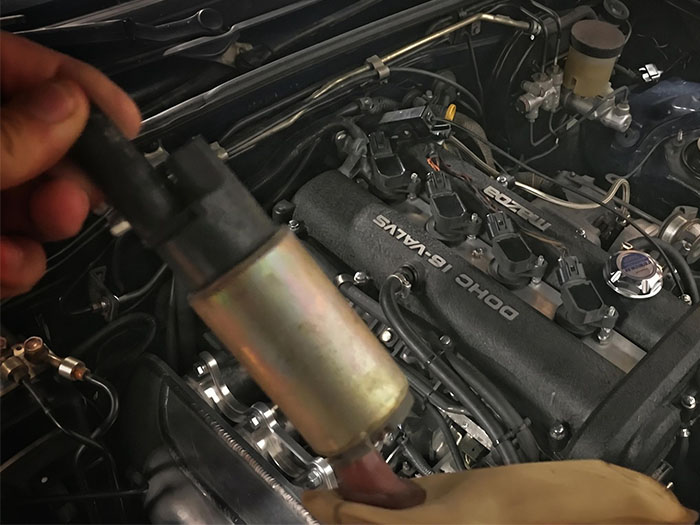
For automotive parts wholesalers, bulk distributors, and large-scale retail procurement managers, a deep understanding of vehicle diagnostics is more than just technical knowledge—it is a critical asset for supply chain stability. When retail garages, mechanics, and end-consumers experience engine performance degradation, they immediately look downstream for answers and replacement components.
Among the most frequent yet complex parts to fail in a modern internal combustion engine is the car fuel pump. Knowing how to accurately pinpoint a failing unit versus other ignition or fuel-delivery anomalies prevents costly warranty misdiagnoses, streamlines inventory management, and builds long-term trust across your entire B2B ecosystem.
A precision-engineered vehicle relies on a highly consistent volumetric flow of pressurized fuel to achieve stoichiometric combustion. The fuel system is the circulatory network of the powertrain, and the fuel pump assembly serves as its mechanical or electrical heart. If this heart falters, vehicle drivability rapidly collapses. This definitive guide delivers an exhaustive technical breakdown of how to know if fuel pump is bad, analyzing key market failure rates, mapping out distinct bad fuel pump symptoms, and defining actionable quality criteria that global buyers must prioritize when selecting a tier-one OEM/ODM fuel pump supplier.
Field-Tested Insights into Car Fuel Pump Failure Mechanisms
NOTE FOR Fuel Pump WHOLESALERS: This section applies our 15+ years of factory-floor manufacturing experience to explain the structural vulnerabilities that cause fuel system degradation, helping buyers filter out sub-par supplier engineering.
From an engineering and manufacturing standpoint, a modern car fuel pump is an intricate electromechanical device operating under brutal, continuous hydraulic cycles. Most contemporary passenger and commercial vehicles deploy an electric in-tank system integrated into a comprehensive fuel pump assembly. This assembly comprises the electric motor, a miniature turbine impeller or roller-vane pumping mechanism, an integrated pressure regulator, an electronic fuel level sending unit, and a primary mesh strainer/filter. Because these units are fully submerged inside the fuel tank, diagnosing their structural decline requires an understanding of what occurs inside the component during field operation.
Throughout over a decade of high-volume manufacturing and systematic forensic teardowns of field-returned units, our engineering teams have categorized fuel pump failure into three primary physical mechanisms:
Armature and Commutator Micro-Wear: The electric motor within the pump relies on carbon brushes contacting a rotating copper commutator. Over tens of thousands of kilometers, the constant friction creates microscopic grooves and carbon dust accumulation. This structural wear increases electrical resistance, forcing the pump to draw higher current (amperage) while yielding significantly lower rotational speed (RPM). Eventually, the motor develops “dead spots” where it fails to initiate rotation upon receiving the ignition signal.
Thermal Stress via Fuel Starvation: Liquid gasoline serves a dual purpose: it is the medium being transferred, and it acts as a coolant and lubricant for the internal high-speed pump bearings. When end-users habitually operate their vehicles on a low fuel tank (below 1/4 full), the pump housing is repeatedly exposed to air rather than being fully submerged. Deprived of a continuous heat sink, internal operating temperatures spike rapidly, leading to thermal expansion of the internal impeller, armature binding, and varnish insulation degradation on the copper windings.
Contamination and Silt Abrasion: Low-tier fuel supplies frequently carry micro-particulates, fine rust from aging gas station storage tanks, and chemical moisture. If the assembly’s primary strainer possesses insufficient filtration efficiency (micrometer rating too high), these abrasives bypass the mesh and score the tight-tolerance internal surfaces of the impeller or rollers. This introduces internal fluid slippage, preventing the pump from maintaining pressure at high engine loads.
The Definitive Technical Breakdown of Bad Fuel Pump Symptoms
NOTE FOR Car Fuel Pump WHOLESALERS: This technical breakdown maps diagnostic data to specific symptoms. Use this criteria to train your sales team, refine product catalogs, and handle technical inquiries from bulk clients.
When providing consultative support to professional service centers or regional retailers, a wholesale supplier must categorize clinical vehicle symptoms with extreme precision. A faulty pump leaves distinct operational signatures. Below is an exhaustive breakdown of the classic signs of a bad fuel pump that signify an impending total component collapse:
Symptom A: High-Pitch Whining or Buzzing from the Fuel Tank
Under normal operations, a premium electric fuel pump emits a barely audible, smooth hum during initial prime and continuous running. When internal bearings wear out or a fluid restriction occurs due to a choked integrated filter, the electric motor undergoes extreme mechanical strain. This strain manifests as a loud, highly localized high-pitch whining, buzzing, or howling sound resonating directly from beneath the rear passenger seats or trunk area. For distributors, a customer reporting this noise provides a clear warning sign that the pump’s internal geometry is failing, creating an immediate opportunity to recommend a complete fuel pump assembly replacement before total vehicle immobilization occurs.
Symptom B: Engine Sputtering, Hesitation, and Power Loss at High Speed
A vehicle traveling at highway velocities or ascending a steep grade demands a significant, continuous volumetric flow rate of fuel to maintain its air-fuel ratio. If the pump suffers from mechanical wear or armature degradation, its flow rate drops under high load. The driver will experience severe engine sputtering, intermittent jerking, or an abrupt loss of throttle response. The vehicle momentarily regains composure when the throttle is released and demand drops. This occurs because a worn pump can manage low-volume idle delivery but fails completely when required to ramp up volume against high engine demands.
Symptom C: Sudden, Unprovoked Engine Stalling Under Normal Operating Temperatures
This represents a highly dangerous symptom frequently traced back to internal thermal electrical shorts. As the pump operates for 20 to 30 minutes, heat builds up within the compromised electric motor windings. The heat causes the copper wires to expand, breaking internal electrical continuity or shorting the circuit. The car fuel pump cuts out instantly, starving the fuel rail of pressure and causing the engine to stall at traffic lights or during cruising. Once the vehicle sits roadside for 15–30 minutes and the pump cools down, the electrical continuity temporarily restores, allowing the engine to restart before repeating the failure cycle.
Symptom D: Engine Cranks Excessively But Fails to Start
A fully functional fuel delivery system retains residual line pressure via an integrated check valve inside the assembly, even when the engine is turned off. If this non-return valve leaks or the pump motor fails to spin during the initial key-on ignition sequence, fuel drops back into the tank. When the driver attempts to fire the engine, the starter motor must crank the engine for an extended duration to draw fuel all the way back up from the tank to the fuel injectors. If the pump is completely dead, the engine will crank continuously without ever catching fire, indicating zero fuel pressure at the rail.
Quick Reference: B2B Diagnostic Symptom Matrix
| Symptom Seen by Client | Root Electromechanical Failure | Recommended B2B Action |
| Loud Whining / Howling Noise | Internal bearing wear or severe filter restriction causing high amperage draw. | Replace with complete fuel pump assembly immediately to prevent total lockout. |
| High-Speed Sputtering / Power Droop | Pump cannot maintain required volumetric flow rate under high load conditions. | Conduct fuel pressure test; restock high-flow replacement units. |
| Stalling After 20–30 Mins Use | Thermal expansion causing internal electrical windings to open or short-circuit. | Isolate fuel pump circuit; replace unit to avoid hazardous roadside failure. |
| Hard Starting / Extended Crank Time | Defective anti-drainback check valve causing fuel pressure drop inside lines. | Check line pressure holding; supply premium assembly with robust check valves. |
Verifiable Testing Methods to Validate a Bad Fuel Pump
NOTE FOR WHOLESALERS: As a tier-1 supplier, we implement strict validation protocols. Equipping your engineering team with these exact metrics reduces false return rates and validates your industry authority.
In the B2B distribution sector, return-merchandise-authorizations (RMAs) can quickly erode profitability if parts are returned due to incorrect workshop diagnosis. Mechanics frequently mistake blown fuses, corroded ground wires, clogged inline fuel filters, or faulty fuel pressure regulator valves for a malfunctioning car fuel pump. To protect your business from false warranty claims, your technical team should counsel buyers to perform these three precise, industry-standard verification tests before declaring a unit defective:
Test 1: The Fuel Pressure Gauge Evaluation (The Gold Standard)
Visual inspection is entirely useless for determining fluid dynamics. Technicians must connect a professional fuel pressure test gauge directly to the Schrader valve on the engine’s fuel delivery rail. Turn the ignition key to the “On” position to prime the system, and cross-reference the static pressure reading against the vehicle’s factory workshop manual.
For instance, a standard modern multi-port electronic fuel injection (EFI) system typically requires a steady static pressure between 35 and 60 PSI (2.4 to 4.1 Bar). Gasoline Direct Injection (GDI) low-pressure feed lines require roughly 50 to 75 PSI. If the reading falls significantly below OEM specification during idle or drops instantly when revving the engine, the pump structure is conclusively verified as weak or failing.
Test 2: Electrical Amperage Draw Testing via Digital Multimeter
A highly sophisticated way to determine if a fuel pump motor is drawing excess power due to mechanical resistance is to measure its current consumption. By utilizing a digital multimeter (DMM) set to the 10A DC setting or a specialized low-amp current probe clamped around the fuel pump power wire, technicians can view the active current draw.
A standard, healthy passenger vehicle car fuel pump should pull between 4 to 8 Amperes under load. If the multimeter reveals a draw exceeding 10 to 12 Amps, it indicates an overloaded electric motor struggling against heavy internal friction or a severely clogged integrated filter. Conversely, a reading of 0 Amps indicates a completely open electrical circuit, blown fuse, or broken internal wire harness.
Test 3: Volumetric Flow Rate Analysis
A fuel pump can occasionally exhibit adequate static pressure while completely failing to deliver sufficient fuel volume over time. To verify volumetric integrity, technicians should safely disconnect the main fuel feed line at the engine bay, routing it into a graduated measuring container.
By jumping the fuel pump relay to run the pump continuously for exactly 30 seconds, they must measure the accumulated fluid volume. A standard commercial pump must deliver approximately 0.5 to 1.0 liter of fuel within a 30-second window (equivalent to roughly 60–120 Liters Per Hour minimum). Anything less confirms a worn impeller or restricted passage, dictating a swap out for a newly manufactured fuel pump assembly.
What Wholesalers Must Look For in a Reliable Fuel Pump Supplier
NOTE FOR WHOLESALERS: Mitigate supply risk by applying these precise manufacturing standards. This is how Ujoin Auto parts guarantees zero-defect shipments at scale.
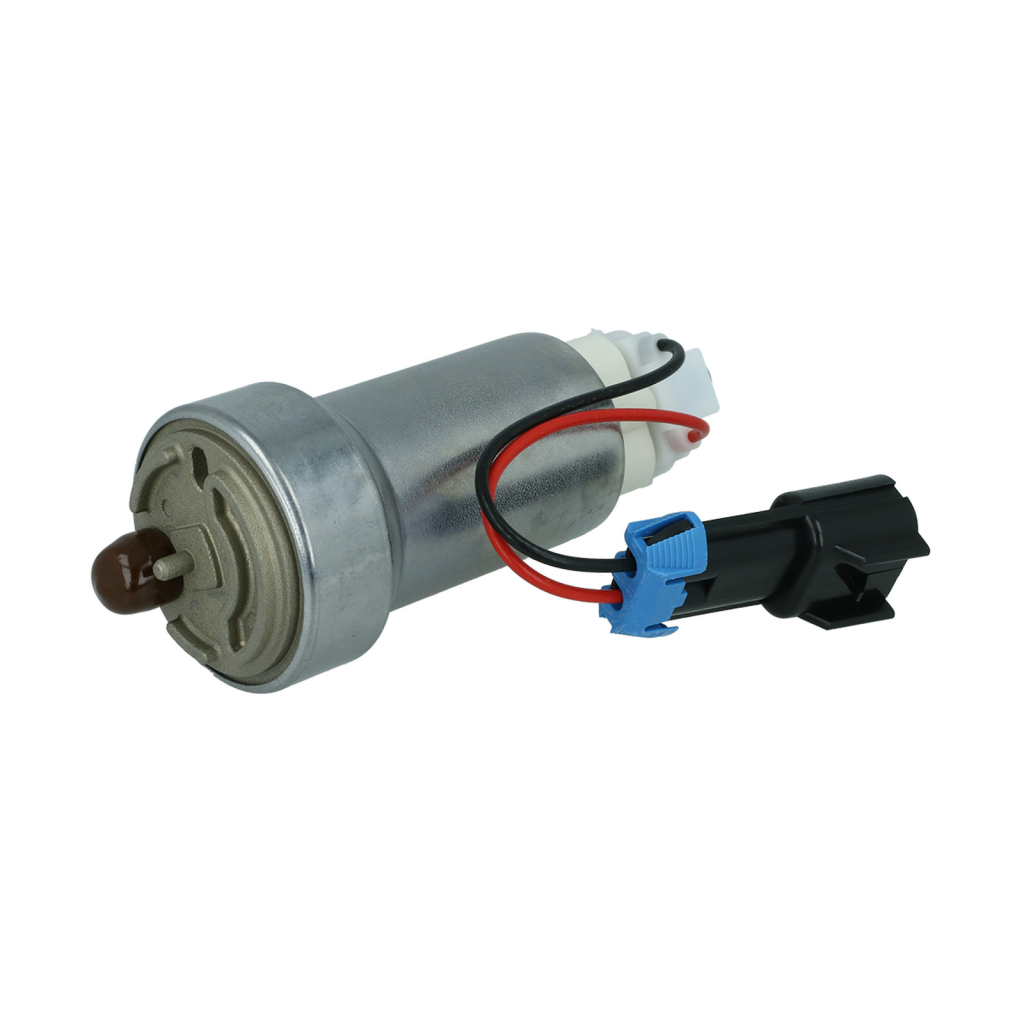
For global automotive parts importers, warehouse distributors, and bulk buyers, profitability relies heavily on the long-term field reliability of your inventory. If you distribute low-cost, unverified fuel components, you face escalating return rates, damaged brand reputation, and lost repeat contracts. Trust is forged on the manufacturing floor. When auditing a potential factory or global fuel pump supplier, procurement professionals must demand compliance across several non-negotiable manufacturing and commercial benchmarks:
Premium Materials Selection (The Core Foundation): Ensure your supplier utilizes 100% pure copper wire for motor windings rather than cheap copper-clad aluminum (CCA), which overheats rapidly. The carbon brushes should be sourced from specialized premium carbon compounds to minimize wear, and the internal fuel level sender contacts should feature palladium-silver alloys to prevent corrosion from high-sulfur or ethanol-blended fuels (E85).
100% End-of-Line Quality Control Certification: A reliable manufacturing facility never relies on statistical batch testing alone. Every single fuel pump assembly that leaves the factory assembly line must undergo automated end-of-line testing. This includes a computerized test for checking volumetric flow rate, strict fuel pressure holding retention, current consumption limits, and pneumatic housing seal integrity to ensure zero out-of-box leaks.
Robust B2B Commercial Support and Warranty Infrastructure: An elite manufacturing partner stands firmly behind their product line. Look for suppliers offering a comprehensive 12-to-24-month defect warranty, flexible minimum order quantities (MOQs) tailored to regional product rollouts, protective multi-layered ocean freight packaging, and direct access to senior automotive engineers to resolve complex application or fitment questions smoothly.
At Ujoin Auto Parts, we embody these strict manufacturing tenets. Our ISO/TS16949-certified facilities engineer high-performance electric fuel pumps and comprehensive assemblies engineered to mirror OEM specifications precisely. By utilizing state-of-the-art precision tooling and premium components, we guarantee our B2B partners exceptionally low defect rates (under 0.2%), maximizing your operational margins and securing your place as a highly trusted supplier in your local marketplace.
FAQ
To help your regional sales personnel resolve frequent technical customer questions rapidly, we have compiled the definitive B2B technical FAQ regarding fuel system component management:
Q1: Is it always necessary to replace the entire fuel pump assembly, or can we just stock the bare electric pump motor?
A1: While stocking bare electric pumps offers a lower initial purchase cost, we strongly advise purchasing and distributing the complete fuel pump assembly. Replacing only the bare pump motor requires service workshops to open the old plastic housing, reuse an aged, potentially clogged internal strainer, and reinstall a worn-out fuel level sender and wiring harness. This drastically increases installation errors and subsequent warranty claims. Selling the full assembly ensures all critical sub-components are brand-new, providing a lasting fix and maximizing wholesale order values.
Q2: Why do new fuel pumps occasionally fail shortly after professional workshop installation?
A2: Early-stage failures (infant mortality) are almost always due to contamination or improper installation processes rather than a product defect. If a fuel tank contains residual rust, fine debris, or water from years of vehicle operation, and the tank is not thoroughly flushed out before dropping in the new module, those contaminants will immediately choke the new filter or score the high-tolerance internal rotors. Technicians must completely clean and dry the tank interior before assembly installation.
Q3: How do ethanol blends like E15 or E85 impact standard car fuel pump components?
A3: Ethanol is highly hygroscopic, meaning it actively absorbs moisture from the atmosphere. This elevated moisture creates a corrosive environment that rapidly degrades standard copper windings and steel surfaces inside a conventional fuel module. For markets with high ethanol distribution, wholesalers must partner with a specialized fuel pump supplier like Ujoin Auto Parts that builds fuel modules featuring advanced plating, anodization, and carbon-commutator configurations designed to withstand aggressive chemical blends.
Conclusion
Mastering how to know if fuel pump is bad allows B2B automotive parts wholesalers to transition from a simple parts vendor into an invaluable technical resource for their regional client base. Recognizing critical bad fuel pump symptoms—ranging from high-pitch tank whines to high-speed engine starvation—ensures your organization handles technical client support and warranty evaluations with absolute clarity and authority.
Ultimately, minimizing market return rates and building a highly profitable distribution network depends heavily on sourcing excellence. Partnering with an expert, quality-focused manufacturing house protects your bottom line from poor engineering and high return cycles. If you are ready to upgrade your supply chain with ultra-reliable, OEM-grade car fuel pump lines and comprehensive fuel pump assembly units, contact the engineering export team at Ujoin Auto Parts today. Let us help you fuel your market growth with premium components that stand the test of time.