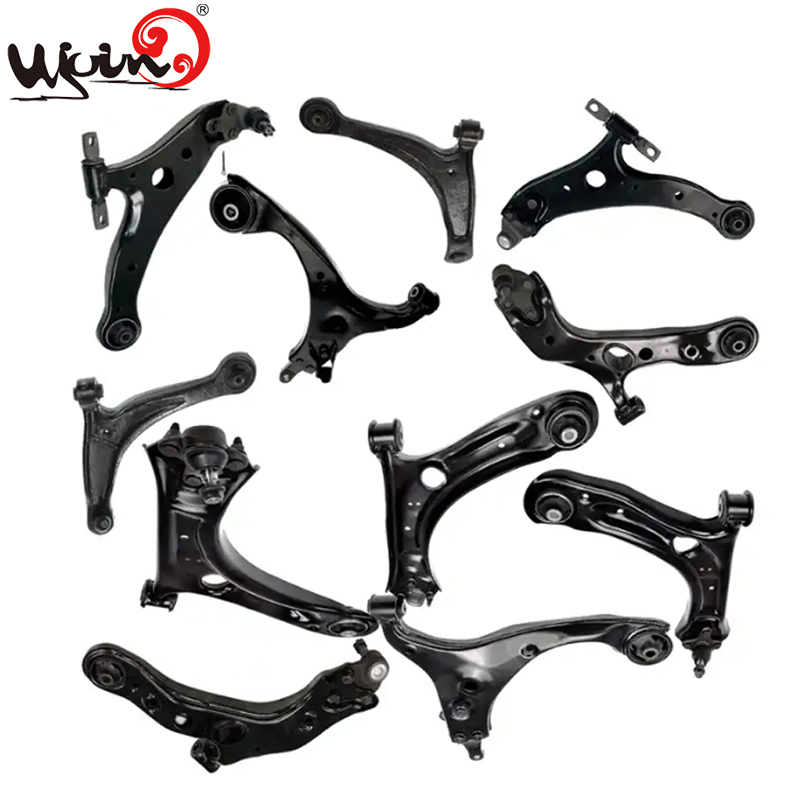
In the world of automotive distribution and repair, few components are as fundamental—yet as frequently scrutinized—as the control arm. Whether you are a seasoned control arm manufacturer, a global control arm supplier, or a local distributor looking to optimize your inventory, understanding the nuances of this critical suspension part is vital for your bottom line.
As the backbone of a vehicle’s handling and safety, control arms are a high-demand item in the aftermarket. In this guide, we dive deep into the essential FAQs that every professional in the control arms car industry needs to master.
What Is a Suspension Control Arm?
At its simplest, a control arm (also known as a “wishbone” or “A-arm”) is a hinged suspension link that connects the vehicle’s chassis or frame to the wheel hub or steering knuckle.
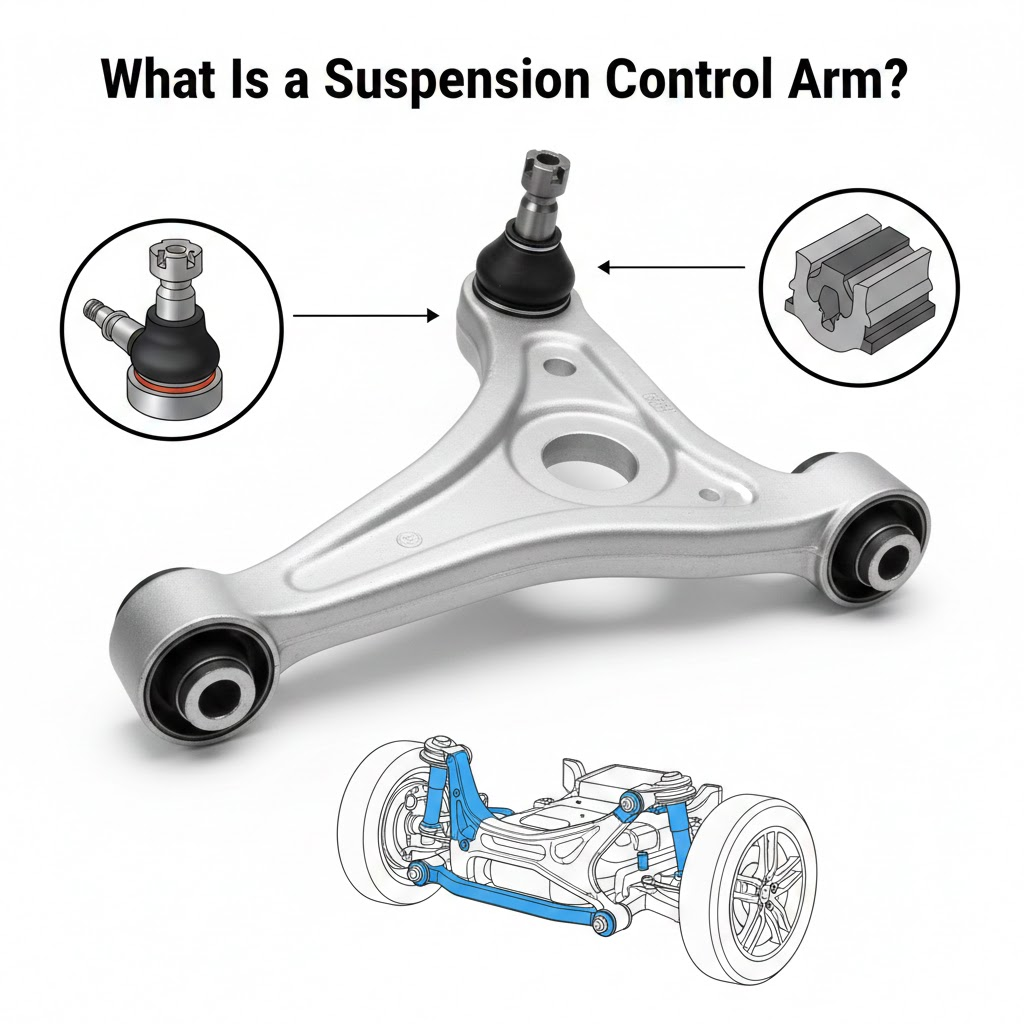
From a manufacturing perspective, it acts as a pivot point that allows the wheels to move up and down in response to road irregularities while maintaining their lateral position. A standard control arm assembly typically consists of three main parts:
- The Arm Body: Usually made of stamped steel, cast iron, or aluminum.
- Bushings: Rubber or polyurethane components that dampen vibration and allow the arm to pivot.
- The Ball Joint: The connection point that allows for rotational movement (steering).
For a control arm supplier, offering a variety of these materials is key to meeting the diverse needs of different vehicle segments—from heavy-duty trucks to lightweight performance cars.
Why Are Control Arms Important?
Control arms are critical because they directly affect vehicle safety, ride comfort, steering accuracy, and tire life.
From a functional perspective, control arms are responsible for:
1. Maintaining Wheel Alignment
Control arms keep the wheels aligned at the correct camber and caster angles. Worn or damaged control arms can cause:
- Uneven tire wear
- Steering pull
- Reduced road stability
2. Absorbing Road Shock
Together with shocks and struts, control arms help absorb impacts from potholes, speed bumps, and uneven surfaces. High-quality control arm bushings significantly reduce vibration transmitted to the chassis.
3. Supporting Steering Precision
In front suspension systems, control arms directly influence steering response. Loose ball joints or cracked bushings can lead to:
- Steering vibration
- Delayed response
- Safety risks at high speeds
4. Ensuring Overall Suspension Integrity
A failed control arm compromises the entire suspension geometry. For this reason, many professional workshops recommend replacing control arms as complete assemblies rather than individual components.
From a wholesale and distribution standpoint, control arms are considered safety-critical parts, which increases buyer focus on: Material quality,,Manufacturing standards,OEM compatibility, Supplier reliability
This is why working with a verified control arm supplier or control arm manufacturer is essential.
Where Are the Control Arms Located on a Car?
Locating a control arm depends on the vehicle’s suspension design. Most modern passenger cars utilize one of two setups:
Front Suspension: Almost every vehicle has lower control arms in the front. Vehicles with a “Double Wishbone” setup will have both Upper and Lower control arms.
Rear Suspension: In multi-link rear suspensions, you will find multiple control arms (often called links) managing the rear wheels’ movement.
If you are looking under a car, the control arm is the sturdy, triangular or L-shaped metal piece that bridges the gap between the car’s frame and the wheel assembly. As a control arms car specialist, it’s important to stock both front-upper and front-lower variants to ensure full market coverage.
How Much Does It Cost to Replace a Control Arm?
The cost of replacing a control arm depends on several factors, including vehicle type, suspension design, labor rates, and part quality.
Typical Cost Breakdown (Retail Reference)
- Control arm part: USD 30 – 200 per unit
- Labor cost: USD 100 – 300
- Total replacement cost: USD 150 – 500 per control arm
For premium vehicles or complex rear suspension systems, costs may be higher.
B2B Wholesale Perspective
From a control arms wholesale standpoint, pricing is influenced by:
- Material type (steel vs aluminum)
- Whether sold with or without ball joint
- OE specification level
- Order quantity
- Packaging and branding
- For wholesalers and importers, control arms offer:
- Good margin potential
- Predictable replacement cycles
- Strong demand in developing and mature markets
Partnering with a competitive control arm supplier allows distributors to balance cost, quality, and market positioning effectively.
What Are the Types of Control Arms?
There are several ways to classify control arms. Understanding these categories is essential for accurate product selection and catalog management.
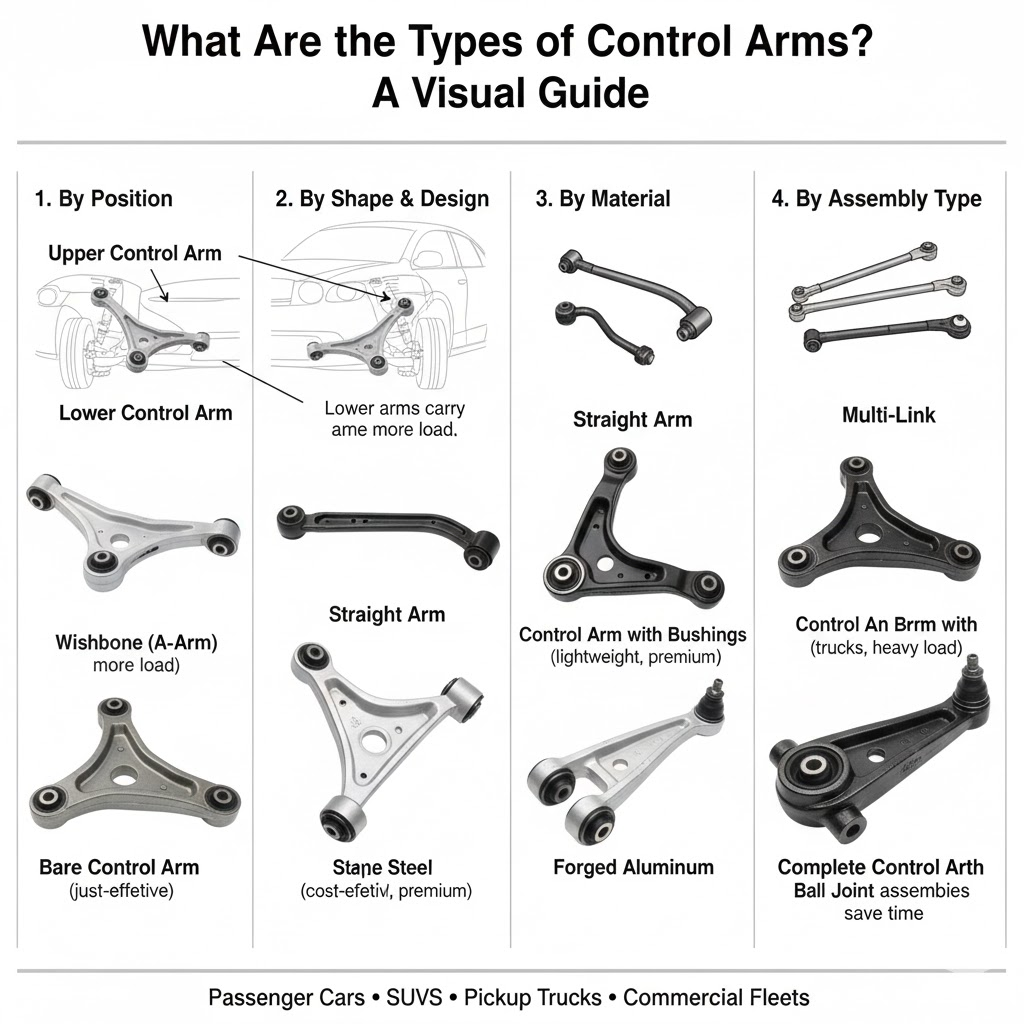
1. By Position
- Upper control arm
- Lower control arm
Lower control arms typically carry more load and experience higher wear.
2. By Shape and Design
- Wishbone (A-arm)
- Straight or curved arms
- Multi-link control arms
3. By Material
- Stamped steel control arms: Cost-effective, widely used
- Forged aluminum control arms: Lightweight, corrosion-resistant, common in OEM and premium segments
4. By Assembly Type
- Bare control arm
- Control arm with bushings
- Complete control arm with ball joint
Most aftermarket buyers prefer complete assemblies, as they reduce installation time and warranty risk.
For distributors, offering multiple types allows better coverage across:
Passenger vehicles,SUVs,Pickup trucks,Commercial fleets.
A capable control arm manufacturer should support full material, design, and application flexibility.
Is UJOIN Control Arm Good?
For wholesalers and distributors evaluating long-term supply partners, product consistency and factory capability matter more than branding alone.
UJOIN Control Arms are developed specifically for the global aftermarket, with a strong focus on B2B requirements.
Key Advantages of UJOIN Control Arms
1. OE-Matched Quality Standards
UJOIN control arms are manufactured using:
- High-strength steel or aluminum materials
- Precision CNC machining and forging processes
- Strict dimensional and fatigue testing
2. Complete Assemblies Available
Most UJOIN control arms are supplied with: Pre-installed bushings
High-durability ball joints
This reduces installation errors and improves workshop efficiency.
3. Wide Vehicle Coverage
UJOIN supports a broad range of applications for: Japanese vehicles、Korean vehicles、European vehicles、American vehicles
This makes UJOIN a reliable control arm supplier for distributors serving multiple markets.
4. Stable Supply for Wholesale Orders
As a professional control arm manufacturer, UJOIN supports:
- Bulk orders
- OEM and ODM projects
- Custom packaging and branding
- Long-term distributor partnerships
5. Export-Focused Quality Control
All products undergo multi-stage inspection to ensure consistency across shipments—critical for importers and regional wholesalers.
For buyers searching online for a dependable control arm supplier or evaluating new control arms wholesale sources, UJOIN represents a balance of quality, price stability, and supply reliability.
Final Thoughts for Auto Parts Wholesalers and Distributors
Control arms are not just suspension components—they are high-rotation, safety-critical products with strong aftermarket demand. For B2B buyers, success in this category depends on:
- Accurate application coverage
- Consistent product quality
- Competitive wholesale pricing
- A reliable control arm manufacturer
By understanding how control arms function, where they are installed, and how buyers evaluate quality, wholesalers and distributors can position themselves more effectively in the market.
If you are expanding your suspension product line or sourcing a long-term control arm supplier, choosing a manufacturer with proven export experience and aftermarket focus—such as UJOIN—can significantly reduce operational and quality risks.
FAQ
1. What is a suspension control arm?
A suspension control arm is a structural suspension component that connects the vehicle chassis to the wheel assembly. In a control arms car suspension system, it ensures controlled wheel movement, proper alignment, and long-term durability under continuous load, making it a high-demand aftermarket replacement part.
2. Why are control arms important for the aftermarket?
Control arms are safety-critical suspension parts that directly affect vehicle stability, steering precision, and tire wear. For importers and distributors, control arms represent a stable, repeat-purchase product category with consistent demand across passenger cars, SUVs, and light commercial vehicles.
3. Where are control arms installed on a vehicle?
Control arms are installed between the vehicle frame and wheel hub. Front suspension systems typically use lower control arms, while double wishbone and multi-link designs may include both upper and lower control arms in the front and rear suspension.
4. How much does it cost to replace a control arm?
In the aftermarket, control arm replacement typically ranges from USD 150 to 500 per unit including labor. For distributors, wholesale pricing depends on material, OE specification level, assembly type, order volume, and the selected control arm manufacturer.
5. What types of control arms are commonly sold wholesale?
Common wholesale control arm types include upper and lower control arms, wishbone (A-arm) designs, and multi-link control arms. Most B2B buyers prefer complete control arms with pre-installed bushings and ball joints to reduce installation time and warranty risk.
6. Is UJOIN a reliable control arm supplier?
Yes. UJOIN is a professional control arm manufacturer and control arm supplier focused on the global aftermarket. UJOIN control arms are produced to OE-matched standards, offer wide vehicle coverage, and support stable control arms wholesale supply for importers and distributors.
7. What is the average service life of a control arm?
Control arms typically have a service life of 80,000 to 150,000 kilometers under normal driving conditions. For commercial fleets and poor road environments, earlier replacement may be required due to accelerated bushing and ball joint wear.
8. Do distributors usually replace control arms individually or in pairs?
Control arms are commonly replaced in pairs on the same axle. For distributors and repair networks, paired replacement helps ensure balanced suspension performance and reduces post-installation alignment complaints.
9. Why do workshops prefer complete control arms?
Complete control arms with integrated bushings and ball joints reduce labor time, simplify installation, and lower the risk of premature failure. This makes them the preferred choice for professional workshops and aftermarket distributors.
10. What should importers look for in a control arm manufacturer?
Importers should evaluate a control arm manufacturer based on production capacity, OE compatibility, material quality, quality control systems, export experience, and the ability to support long-term control arms wholesale supply.