The Strategic Importance of Ball Joint Sourcing
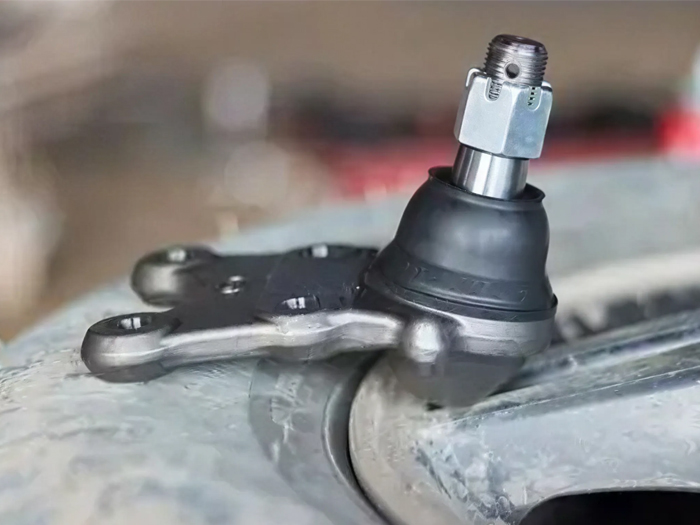
Navigating the aftermarket demands an uncompromised focus on vehicle safety, component structural integrity, and inventory profitability. For spare parts suppliers, regional wholesalers, commercial fleet managers, and repair workshop chains, chassis parts represent one of the highest-turnover and most risk-sensitive product lines in inventory. Among these suspension components, the humble ball joint acts as the critical pivot point linking control arms to steering knuckles, absorbing continuous vertical forces, road shocks, and steering friction.
Selecting a reliable Ball Joints Supplier is far more than a simple pricing negotiation—it is a core business operational decision. Sourcing low-grade, poorly heat-treated steering and suspension components leads directly to catastrophic ball stud shearing, premature boot cracking, expensive warranty claims, and irrecoverable brand damage among your commercial clients.
Conversely, forming a long-term strategic partnership with an experienced Ball Joints Manufacturer ensures consistent OE-quality manufacturing, robust material selection, precise machining tolerances, and stable supply chains.
Whether you are expanding your catalog to include European, American, Japanese, or Korean vehicle applications, or looking to optimize your procurement costs by evaluating a verified Auto Parts Supplier in China, this comprehensive sourcing guide breaks down every technical, operational, and commercial metric required to choose the right partner.
Key Quality & Technical Parameters to Evaluate in a Ball Joints Manufacturer
To avoid common aftermarket pitfalls, procurement teams must look past slick marketing collateral and evaluate the hard engineering specifications of the ball joints being produced. A top-tier chassis component manufacturer maintains tight quality control across three core elements: steel metallurgy, socket housing construction, and rubber dust boot seal design.
1.1 Steel Metallurgy and Heat Treatment Precision
The load-bearing capacity of a ball joint hinges entirely on the quality of the ball stud steel. High-stress vehicle suspension systems demand precision-machined forged carbon steel or alloy steel.
- Premium Material Grades: 4140 Chromoly Steel or 40Cr steel alloy forging ensures maximum tensile strength and fatigue resistance under dynamic load changes.
- Heat Treatment Rigor: The ball stud must undergo induction hardening or quenching and tempering to achieve a core toughness that prevents brittle fracture while maintaining surface hardness (HRC 58-62) to resist frictional wear.
- Flaw Detection: Ensure your Ball Joints Manufacturer provides mill test certificates (MTC) and performs full magnetic particle inspection (MPI) to identify microscopic internal cracks or voids before machining.
1.2 Housing Forging vs. Stamping & Ball Pocket Engineering
Ball joint housings are subjected to severe lateral forces and vertical tension. A dependable Ball Joints Supplier utilizes hot or cold forging techniques rather than cheap stamped sheet metal for critical applications.
- Forged Housing Integrity: Forged housing structures eliminate internal porosity and handle high-impact stress significantly better than cast iron or low-cost stamped alternatives.
- POM Bearing Liners: High-grade synthetic POM (Polyoxymethylene) or metal bearing races inside the socket maintain precise sphere-to-socket contact, preventing premature joint looseness, clunking noises, and alignment failure.
1.3 Sealing Systems: Rubber Dust Boots & High-Performance Grease
Over 70% of premature ball joint failures occur due to water ingress or lubricant breakdown following dust boot failure. Evaluating the rubber compound and internal lubrication is mandatory:
- CR/EPDM Compound: Top manufacturers utilize high-grade CR (Chloroprene) or EPDM rubber boots that withstand extreme temperature ranges (-40°C to +120°C), resisting ozone degradation, road salt, oil, and gravel impact.
- Multi-Lip Boot Seals: The boot must be securely fastened using stainless steel or treated spring steel retaining rings (circlips) to prevent contamination during full steering articulation.
- Synthetic EP Grease: Premium ball joints are pre-lubricated with specialized synthetic lithium complex greases containing molybdenum disulfide (MoS2) for extreme pressure (EP) wear protection.
Assessing Manufacturing Capability and Factory Standards
When vetting a potential automotive spare parts supplier, assessing their factory floor capability and quality management framework guarantees that every production batch meets uniform standards.
2.1 Essential Industry Certifications
Never partner with a suspension component vendor that lacks certified quality management systems. Request copy documentation for:
- IATF 16949 Certification: The gold standard for global automotive original equipment and aftermarket component production, ensuring process control, defect prevention, and continuous improvement.
- ISO 9001 Quality Management: Validates fundamental organizational management and operational standardization.
- E-Mark / CE Compliance: Essential for European market distribution, proving that steering and suspension safety components comply with strict safety regulations.
2.2 Advanced Testing Equipment & QC Workflows
Ask your prospective Ball Joints Manufacturer to detail their in-house testing equipment. A dedicated OEM/OES facility should routinely conduct:
- Muddy Water Fatigue Testing: Simulating tens of thousands of dynamic steering rotations under high radial and axial loading to calculate component lifespan.
- Push-Out & Pull-Out Force Testing: Verification of the force required to break the ball stud away from the housing socket under vertical stress.
- Salt Spray & Environmental Chamber Testing: Exposing boots, housings, and protective anti-rust coatings to 480+ hours of continuous salt spray to guarantee corrosion protection.
- Dimensional Precision Inspection: Using coordinate measuring machines (CMM) to ensure sphere sphericity (within 0.005mm) and accurate mounting dimensions.
| PROCUREMENT BEST PRACTICE: Always request a comprehensive Production Part Approval Process (PPAP) Level 3 report or full initial sample inspection report (ISIR) prior to releasing deposit payment for initial production runs. |
Product Range, Fitment Accuracy, and Catalog Diversity
For auto parts wholesalers and repair shop chains, stock efficiency depends on comprehensive catalog coverage and zero-error fitment accuracy. Working with a single supplier capable of delivering broad suspension coverage significantly reduces logistics overhead and freight consolidation costs.
3.1 Coverage across Global Vehicle Platforms
A mature Auto Parts Supplier in China should offer an extensive product portfolio covering various chassis configurations:
- Structural Mounting Styles: Press-in ball joints, bolt-on ball joints, rivet-style ball joints, and integrated control arm assembly ball joints.
- Vehicle Applications: Extensive SKU databases covering Japanese (Toyota, Honda, Nissan), European (BMW, Mercedes, VW, Audi), American (Ford, GM, RAM), and Korean (Hyundai, Kia) passenger cars, SUVs, pickup trucks, and light commercial vehicles (LCVs).
- Heavy-Duty & Performance Lines: High-articulation and heavy-duty reinforced ball joints tailored for off-road 4×4 vehicles, commercial delivery fleets, and performance suspension setups.
3.2 Fitment Verification & OEM Cross-Referencing
Fitment errors kill profits in the auto parts industry through return shipping costs and lost shop labor time. Your Ball Joints Supplier must maintain updated cross-reference databases mapping directly to original equipment (OE) numbers, TecDoc IDs, and major aftermarket brand numbering systems (e.g., Moog, TRW, Delphi, Lemförder, 555).
Sourcing directly from China: Cost Optimization vs. Quality Control
China remains the world’s primary manufacturing hub for steering and suspension components, offering unparalleled supply chain efficiency, raw material access, and cost competitiveness. However, sourcing from an Auto Parts Supplier in China requires a balanced approach to capture cost savings while maintaining strict quality assurance.
4.1 Discerning Manufacturers from Pure Trading Agencies
When evaluating suppliers via trade platforms or independent websites, determine whether you are speaking directly to a specialized factory or a middleman trading firm.
- Direct Ball Joints Manufacturer: Direct manufacturers operate dedicated forging, CNC machining, heat treatment, and automated assembly lines. They provide deeper technical support, flexible customization (OEM/ODM), direct quality accountability, and competitive factory-direct pricing.
- Trading Companies: Sourcing agencies may offer broader product variety across multiple vehicle systems, but often lack direct quality oversight, engineering capability, and margin flexibility.
4.2 Total Cost of Ownership (TCO) Analysis
Looking purely at FOB (Free on Board) unit pricing is a common mistake in auto parts procurement. Calculate your Total Cost of Ownership by factoring in:
- Landed Cost Calculations: Shipping freight, import duties, customs clearance tariffs, local warehousing costs, and insurance.
- MOQ Flexibility: Minimum order quantities per SKU. High-capacity factories may require 300–500 pieces per SKU, whereas flexible suppliers offer lower MOQs for stocked items.
- Defect & Warranty Terms: Clarifying warranty replacement procedures, scrap allowances, and reimbursement terms for defective items.
Packaging, Branding, and Private Label Support
For established distributors and regional brands, custom packaging and private label support are essential for building equity in local markets.
- Private Label Packaging: Ensure the supplier provides customized color boxes, high-density protective foam inserts, branded dust caps, anti-counterfeit holographic labels, and clear barcode printing (EAN/UPC/TecDoc readable).
- Corrosion Protection during Shipping: Ball joints exposed to maritime humidity during sea freight must be sealed in anti-rust VCI (Vapor Corrosion Inhibitor) polybags, packed inside heavy-duty corrugated cartons, and wrapped on fumigated wooden pallets.
- Complete Hardware Kits: Confirm that necessary installation accessories—such as castle nuts, cotter pins, snap rings, grease zerk fittings, and mounting bolts—are included in the box and coated with anti-corrosion plating.
Checklist for Sourcing Ball Joints
Before issuing purchase orders or signing long-term supply agreements, execute this structured audit checklist:
- Step 1: Company Credentials Verification: Inspect product catalogs, check corporate registration documents, and verify physical plant addresses using factory video tours or third-party audit reports (e.g., SGS, TÜV, Bureau Veritas).
- Step 2: Sample Inspection & Lab Testing: Order physical production samples. Subject them to fitment checks, boot elasticity checks, surface finish evaluations, and destructive testing in a trusted third-party laboratory.
- Step 3: Client References & Track Record: Request references from existing B2B customers operating in similar geographical regions to evaluate delivery reliability and warranty response rates.
- Step 4: Operational Terms Audit: Review supply chain lead times (typically 30–45 days for production), payment terms (e.g., T/T 30% deposit, 70% against Bill of Lading), and container loading efficiency.
FAQ
Q1: What are the primary signs of a failing ball joint, and how does component quality prevent them?
Common symptoms of ball joint failure include clunking or popping noises from the front suspension when going over bumps, steering wheel vibration, excessive vehicle wandering, and uneven tire shoulder wear. High-quality ball joints prevent these issues by utilizing precision-ground mirror-finish ball studs, high-density POM socket liners, and durable dust boots that prevent grease dry-out and dirt contamination.
Q2: What is the difference between sealed and greaseable ball joints?
Sealed ball joints are pre-lubricated at the factory for life and require no ongoing maintenance, making them ideal for most modern passenger cars. Greaseable ball joints feature a grease zerk fitting allowing mechanics to flush out contaminants and replenish grease during routine service, making them popular in commercial fleets, heavy-duty pickup trucks, and off-road 4×4 applications.
Q3: How do I know if an Auto Parts Supplier in China offers genuine OE-quality ball joints?
Verify that the factory operates under IATF 16949 certification, utilizes high-grade steel alloys (such as 40Cr or 4140), uses CR rubber for boots, and conducts full metallurgical, salt spray, and fatigue pull-out testing. Request comprehensive PPAP documentation or lab test reports prior to bulk ordering.
Q4: What is the typical Minimum Order Quantity (MOQ) when sourcing ball joints directly from a factory?
Factory MOQs generally range between 200 to 500 pieces per SKU for custom manufacturing runs. However, established suppliers with stock programs or flexible production scheduling may offer lower MOQs (50–100 pieces per SKU) for popular fast-moving part numbers.
Q5: Why is the dust boot material so critical in suspension parts sourcing?
The dust boot is the primary line of defense. Cheap PVC or recycled rubber boots crack easily under low winter temperatures, UV exposure, or ozone exposure. Once the boot fails, road grime and moisture act as abrasive grinding pastes inside the socket, causing rapid ball joint play and catastrophic failure within months.
Conclusion
Choosing the right Ball Joints Supplier is a long-term investment in your brand’s reputation, customer loyalty, and operational profitability. By evaluating steel quality, housing forging standards, boot rubber durability, factory certifications, and full catalog compatibility, B2B buyers can eliminate product returns and secure a competitive advantage in the aftermarket.
As a specialized Auto Parts Supplier in China, UJOIN Auto Parts (ujautoparts.com) delivers premium OE-quality steering and suspension components designed for global automotive distributors, regional wholesalers, and commercial fleets. With rigorous IATF 16949 certified quality control, high-precision CNC machining, durable EPDM dust boots, and comprehensive vehicle platform coverage, we empower your business with reliable products and competitive direct factory pricing.
Contact our engineering and sales team today at UJOIN Auto Parts to request a customized quotation, schedule a factory audit, or order sample kits for your target vehicle markets.