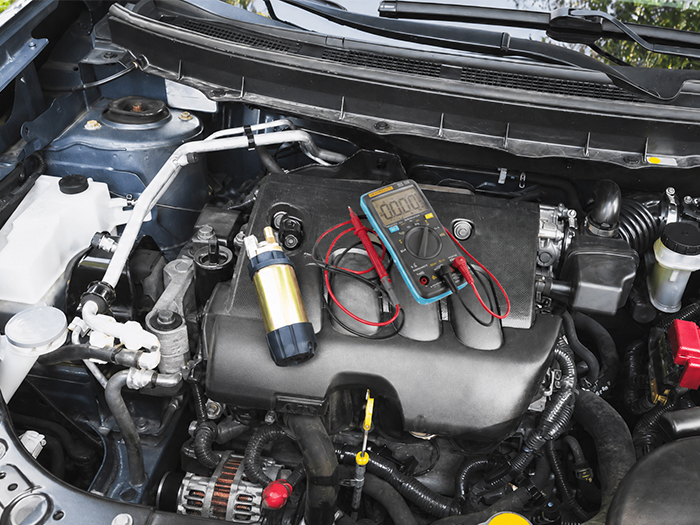
Fuel pump failures present one of the most frustrating diagnostic challenges for automotive technicians and workshop owners. An engine that cranks without starting, suffers from random power surges, or stutters under heavy acceleration often points toward fuel delivery issues. However, immediately replacing the pump without performing accurate tests leads to misdiagnosis, unnecessary labor expenses, and dissatisfied customers. For spare parts distributors and importers, understanding proper testing protocols helps reduce unjust warranty claims and boosts technical authority with client networks.
Whether you operate a commercial garage or manage a wholesale distribution business, mastering how to test a fuel pump step-by-step saves valuable billable hours and ensures long-term vehicle reliability. Partnering with a reliable fuel pump supplier guarantees access to OEM-spec components, but accurate diagnostic procedures remain the essential first step in resolving vehicle performance complaints. This comprehensive technical guide outlines electrical, pressure, flow rate, and bench-testing methods required to isolate fuel delivery issues accurately.
Recognizing the Symptoms of a Failing Fuel Pump
Before reaching for diagnostic tools, professional technicians must evaluate the symptoms reported by vehicle owners or observed during intake. Accurate symptom identification prevents technicians from confusing fuel system defects with ignition misfires or sensor failures.
A. Hard Starting or Engine Crank No-Start
When an electric fuel pump fails internally or suffers from severely worn carbon brushes, it cannot maintain sufficient prime pressure. The starter motor turns the crankshaft normally, but the lack of fuel delivered to the injectors prevents combustion. If the engine starts after spraying starter fluid into the throttle body, the ignition system is likely operational, isolating the problem to fuel supply.
B. Engine Hesitation, Sputtering, and Power Loss Under Load
Vehicles requiring high fuel flow—such as during highway overtaking, towing, or uphill climbing—demand consistent fuel volume. A worn pump impeller or clogged internal strainer restricts flow under elevated demands, causing severe engine hesitation, lean misfires, or stalling.
C. Abnormal Whining Noise from the Fuel Tank
While a functional fuel pump produces a low, subtle hum for 2 to 3 seconds upon key ignition, a high-pitched whining or grinding sound indicates severe internal friction, contaminated fuel, or worn bearings. Workshop mechanics should inspect tank cleanliness whenever excessive motor noise occurs.
D. Engine Stalling at Elevated Operating Temperatures
Electrical windings inside an aging electric fuel pump motor expand as thermal stress accumulates. Shorted copper windings or thermal breakdown can cause the pump motor to freeze after 20 to 30 minutes of driving. Once the vehicle cools down, the pump may temporarily resume operation, tricking inexperienced mechanics.
Safety Precautions and Required Equipment
Working with pressurized automotive fuel systems requires strict safety protocols to prevent fire hazards, skin contact with hazardous hydrocarbons, and electrical sparks.
Essential Safety Checklist:
- Disconnect the Battery: Always disconnect the negative battery terminal before opening fuel lines or accessing electrical relays.
- Relieve System Pressure: Depressurize the fuel rail via the Schrader valve or remove the fuel pump relay while letting the engine idle until it stalls.
- Maintain Fire Safety: Keep a Class B fire extinguisher readily accessible in the service bay at all times.
Required Workshop Tools:
To perform complete fuel system diagnostics, workshops need a specialized fuel pressure gauge kit with quick-disconnect adapters, a digital multimeter (DMM) rated for automotive electronics, a 12V DC power source/jumper wire set, a graduated glass measurement cylinder, and safety eye protection.
WHOLESALE & REPAIR ADVICE
Working with a premium China auto parts supplier like Ujoin Auto Parts ensures that replacement electric fuel pumps meet precise OE flow rates and pressure specs, reducing comeback rates for busy service centers. |
How to Test a Fuel Pump
Method 1: Preliminary Auditory & Electrical Relay Check
Before connecting pressure gauges, verify whether the electric motor receives control signals and power:
- Turn the ignition key to the ‘ON’ position without cranking the engine. Listen near the fuel filler cap or under the rear seats for a distinct 2–3 second priming hum.
- If no sound is heard, open the engine fuse box and locate the fuel pump relay. Swap the relay with an identical component (such as the horn or AC compressor relay) to eliminate relay coil failure.
- Inspect the primary fuel pump fuse for blown filament wires caused by excessive electrical current draw.
Method 2: Multimeter Electrical Diagnostics (Voltage and Ground)
If the pump fails to prime, perform voltage drop and continuity tests directly at the pump harness connector:
- Power Supply Voltage Test: Set your digital multimeter to DC Volts. Connect the positive probe to the power supply terminal of the pump harness and the negative probe to a clean chassis ground. Turn the ignition key ON. The multimeter should read within 0.5V of battery voltage (typically 12.0V – 12.6V). If voltage is below 10.5V, check for corroded wiring, damaged connectors, or ignition switch resistance.
- Ground Circuit Continuity Test: Switch the multimeter to Ohms. Touch one probe to the harness ground pin and the other to the vehicle chassis frame. The resistance reading should be less than 0.2 Ω. High resistance indicates corroded ground eyelets or broken ground straps.
- Current Draw (Amperage) Testing: Using an inline amp clamp or series multimeter setup, measure current draw while the pump runs. A standard inline fuel pump typically draws between 4 to 8 Amps. Excessive amperage draw (>10A) points to tight motor bearings, internal mechanical binding, or a severely clogged fuel strainer.
Diagnostic Matrix: Electrical & Mechanical Symptoms
| Diagnostic Condition | Multimeter / Gauge Reading | Probable Root Cause |
| No Motor Priming Sound | 0 Volts at Pump Connector | Blown Fuse, Defective Relay, or ECM Control Fault |
| No Motor Priming Sound | 12.5V Power / Good Ground | Open Circuit in Motor Windings or Burned Brushes |
| Motor Runs, Low Fuel Pressure | 12.5V / Pressure < Spec | Clogged Fuel Strainer, Defective Regulator, or Worn Impeller |
| Motor Runs, Pressure Rapidly Drops | Pressure drops immediately on shutoff | Leaking Check Valve, Stuck Injector, or Faulty Regulator |
Method 3: Fuel Pressure Gauge Diagnostics
Electrical testing verifies motor operation, but hydraulic testing confirms actual fuel delivery force. Follow this standardized procedure:
- Attach Pressure Gauge: Connect a fuel pressure gauge to the Schrader valve on the fuel rail. For vehicles without a Schrader valve, use T-adapters to connect inline between the supply line and rail.
- Key-On Engine-Off (KOEO) Pressure Test: Turn ignition key ON twice to cycle the pump and build system pressure. Compare the gauge reading against manufacturer OEM specifications (typically 35–65 PSI for Port Fuel Injection, higher for direct injection feed pumps).
- Key-On Engine-Running (KOER) Dynamic Test: Start the engine and observe system stability at idle speed. Snap the throttle quickly; the pressure should surge instantly by 3 to 5 PSI. A hesitation or drop in pressure under throttle indicates restricted supply or a dying pump.
- Residual Pressure Hold Test (Check Valve Check): Turn the engine OFF and observe pressure retention for 15 to 20 minutes. If pressure drops by more than 10 PSI within 5 minutes, the internal pump check valve, fuel pressure regulator, or fuel injectors are leaking.
Method 4: Fuel Volume and Flow Rate Testing
A fuel pump can generate high static pressure while failing to deliver adequate fuel volume. Volume testing measures true pump efficiency:
- Disconnect the main fuel return line or outlet pipe and direct it into an approved, calibrated measuring container.
- Bypass or actuate the fuel pump relay for exactly 30 seconds.
- Measure collected fuel output. Standard passenger car pumps should output roughly 1 quart (approx. 0.95 Liters) per 30 seconds (or 120 Liters per Hour). If pressure is good but volume is lower than 70% of specification, replace the pump or fuel filter.
Why Sourcing Quality Fuel Pumps Matters for Auto Parts Wholesalers
For auto parts importers, regional distributors, and large garage networks, diagnostic accuracy is only half the battle. Installing sub-standard replacement assemblies leads to high warranty return rates, premature pump failure, and damaged business reputations.
As an established fuel pump manufacturer and trusted automotive spare parts supplier, Ujoin Auto Parts integrates precision manufacturing with rigorous factory quality control. Every fuel pump module engineered in our facilities undergoes rigorous dynamic testing, shell balance testing, pressure hold verification, and high-temperature endurance testing.
- OE-Matching Dimensional Accuracy: Guarantees seamless direct-fit installation, eliminating harness wire modification or tank sealing issues.
- High-Purity Copper Commutators and Carbon Brushes: Reduces electrical resistance, extends operational lifespan, and resists wear from modern ethanol-blended fuels (E10/E85).
- Precision Impeller Design: Delivers whisper-quiet operation and smooth, pulsation-free fuel pressure across full engine temperature ranges.
Partnering directly with a reputable China Auto Parts Supplier allows global distributors to optimize procurement budgets, access extensive product catalogs covering American, European, and Asian vehicle applications, and streamline supply chain management.
FAQ
Q1: Can I test a fuel pump without removing it from the fuel tank?
Yes. Electrical multimeter testing at the harness connector and hydraulic pressure testing at the engine bay Schrader valve allow mechanics to diagnose 90% of pump issues without dropping the fuel tank.
Q2: What causes a fuel pump to fail repeatedly?
The most common cause of repeated fuel pump failure is driving on a consistently low fuel tank (below 1/4 full). Fuel acts as a coolant and lubricant for the internal pump motor. Running on empty causes thermal overheating. Dirty fuel tank sediment and clogged strainers also burn out motor windings rapidly.
Q3: How much pressure should a healthy electric fuel pump deliver?
Most modern port fuel-injected (PFI) engines operate between 40 to 65 PSI. Gasoline Direct Injection (GDI) low-pressure feed pumps usually produce 50 to 90 PSI to feed the high-pressure mechanical engine pump. Always cross-reference exact workshop service manuals.
Q4: Why should auto repair shops source fuel pumps directly from qualified manufacturers?
Direct sourcing from audited manufacturing suppliers guarantees consistent component metallurgy, strict quality compliance, lower warranty costs, and direct engineering support, ensuring ultimate customer satisfaction.
Conclusion
Accurate fuel pump testing requires a systematic diagnostic approach—combining auditory checks, multimeter electrical tests, pressure gauge analysis, and volume measurement. By systematically ruling out blown fuses, faulty relays, and ground resistance before replacing hardware, mechanics eliminate costly diagnostic errors and build trust with vehicle owners.
For automotive wholesalers, distributors, and repair centers seeking durable replacement components, quality manufacturing makes all the difference. Explore Ujoin’s complete catalog of premium electric fuel pumps and fuel assembly modules at Ujoin Auto Parts . As your premier fuel pump supplier and trusted automotive supply chain partner, we deliver tested durability, global OEM compatibility, and competitive factory pricing.